
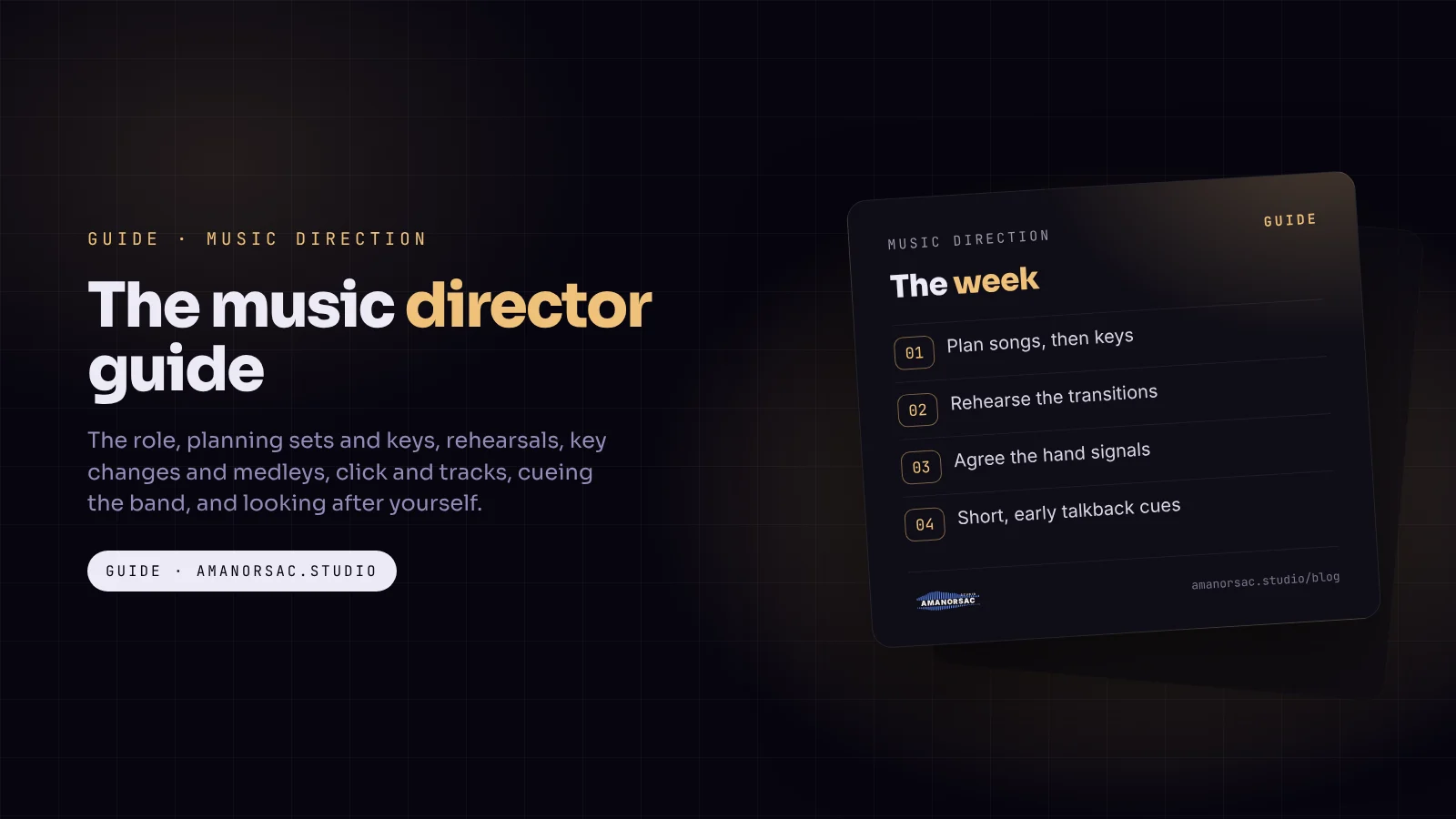
The music director is the person the band watches. They plan the songs and keys, run the rehearsal, hold the arrangement together on Sunday, and make the moment-by-moment calls that turn a list of songs into worship: go round again, drop down, build, change key, stop.
It is one of the least written-about jobs in the church. This guide pulls together everything on the blog about it, in the order a music director's week runs.
What the role is
The music director is not always the worship leader. The worship leader leads the congregation, usually from the front with a microphone. The music director leads the musicians, often from the keys, the guitar or the drums. In a small church one person does both. In a large one, they are separate, and they need to agree on who calls what.
- What does a church music director do?: the role, the week, how it differs from worship leader and choir director, and how it works in African churches.
Planning the set
Start with the flow of the service, then the songs, then the keys. Keys should suit the lead singer first. Group songs that can share a key, and plan every key change in advance, so the band reads one line, not five charts.
- Key changes in worship: the four key changes that work, moving between songs in a praise medley, and cueing the choir.
Tools that help: Chordlight 88 names the chords you play on the piano, which makes working out a song in a new key quicker, and Easy Stems, coming soon, separates a recording into its instruments so the band can learn its parts.
Rehearsal
A rehearsal that runs every song top to bottom five times wastes most of its time. Rehearse the hard parts: the transitions, the key changes, the endings, the first note after a change. Run the whole set once at the end.
- What does a church music director do? includes a rehearsal order that works.
Click, tracks and cues
A click and backing tracks hold a band together, but only when the team trusts them. Introduce the click in rehearsal, not on Sunday, and give it only to the people who need it.
- PerformLive plays stems, the click and spoken cues, with the click and cues on their own outputs for the band's ears.
- Worship team in-ear mixes: where the click goes and how loud.
On Sunday: leading from the keys
Most of what a music director does on Sunday is signals: a hand up for "round again", a flat hand for "drop down", fingers for the next key. Agree them with the band and keep them the same every week. Use the talkback microphone for cues only, short and early.
Looking after yourself and the team
Long services, late rehearsals and heavy lifting take their toll on the people making the music.
- The musician's body check: looking after hands, back and hearing.
- The 7-day voice reset: for singers and worship leaders who have pushed their voice too hard.
- The gig money split: talking about money with musicians fairly.
Questions people ask
What is the difference between a music director and a worship leader?
The worship leader leads the congregation from the front. The music director leads the musicians and holds the arrangement together. In small churches one person often does both.
How do I plan a worship set?
Start with the flow of the service, choose songs to fit it, set keys for the lead singer, group songs by key, and plan every key change in advance.
How do I run an efficient band rehearsal?
Rehearse the transitions, key changes and endings, not whole songs over and over. Run the full set once at the end.
How do I cue a band during worship?
With agreed hand signals and short, early talkback cues through the in-ears. Keep the signals the same every week.
Should church musicians be paid?
It is a real debate. The gig money split post looks at how to talk about money fairly with musicians.
Written by Stephen Amanor Sackey — producer, mix engineer and music director, Virginia. More about the studio.
Studio news
Struggling to move forward in your music?
Guides from a working music director, written for the churches we actually work in: church sound, worship teams, free sheets for the desk, and the apps, with the free one first. A few letters a month at most, and every one has a link to stop.
You will get one email asking you to confirm. Your first app is 15% off when you join. Privacy.