

I have watched good musicians take bad gigs out of panic, because a quiet month arrived and nothing had been set aside. I have also watched a $300 gig disappear in a week because it landed in the same account as everything else. The fix is not a spreadsheet degree. It is one habit: every time money lands, split it the same day.
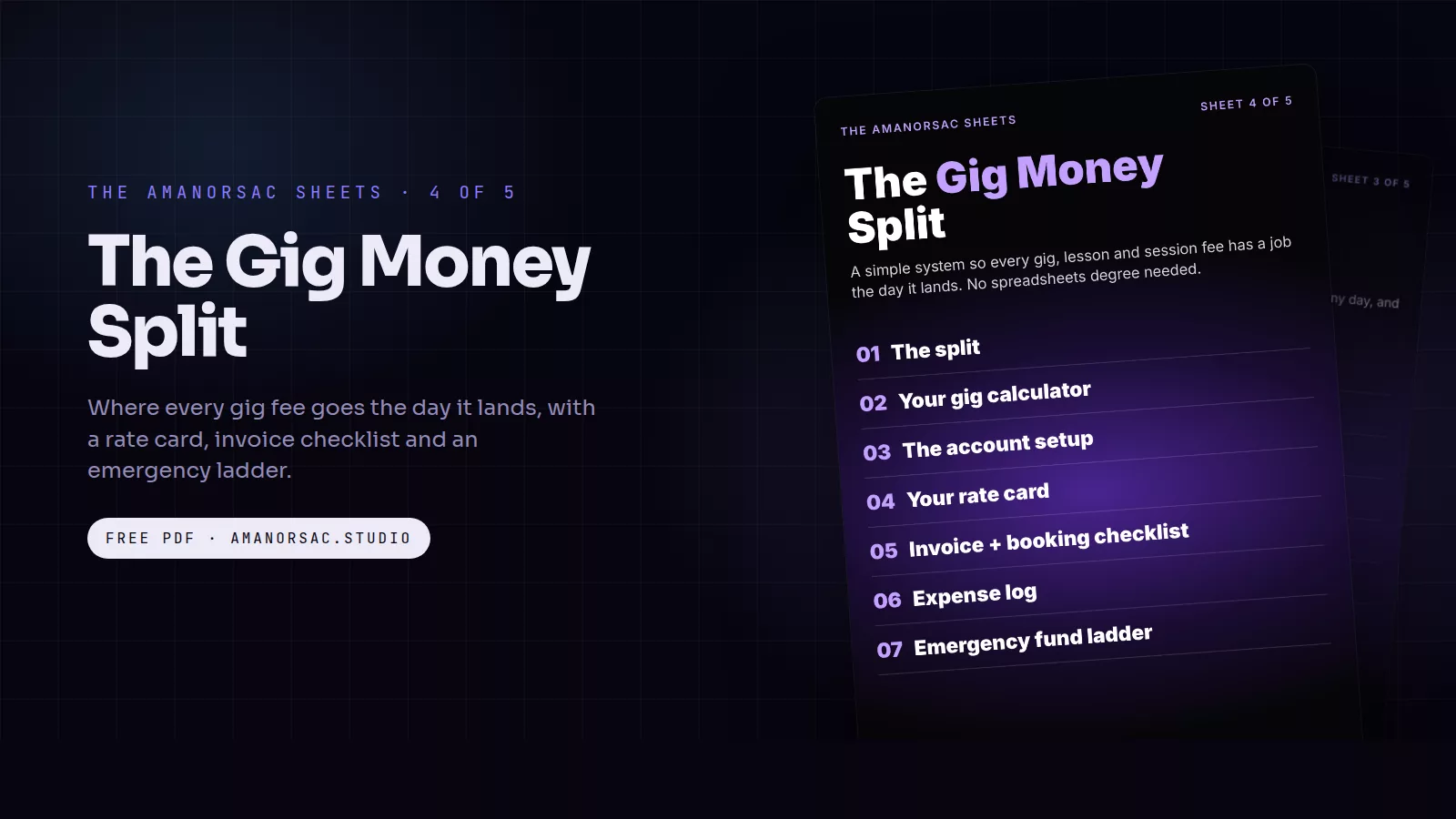
The Gig Money Split is the fourth of the five free sheets. It is a simple system so every gig, lesson and session fee has a job the day it arrives.
Every card in this post is free to save and share. Tap one to open it full size.
The split
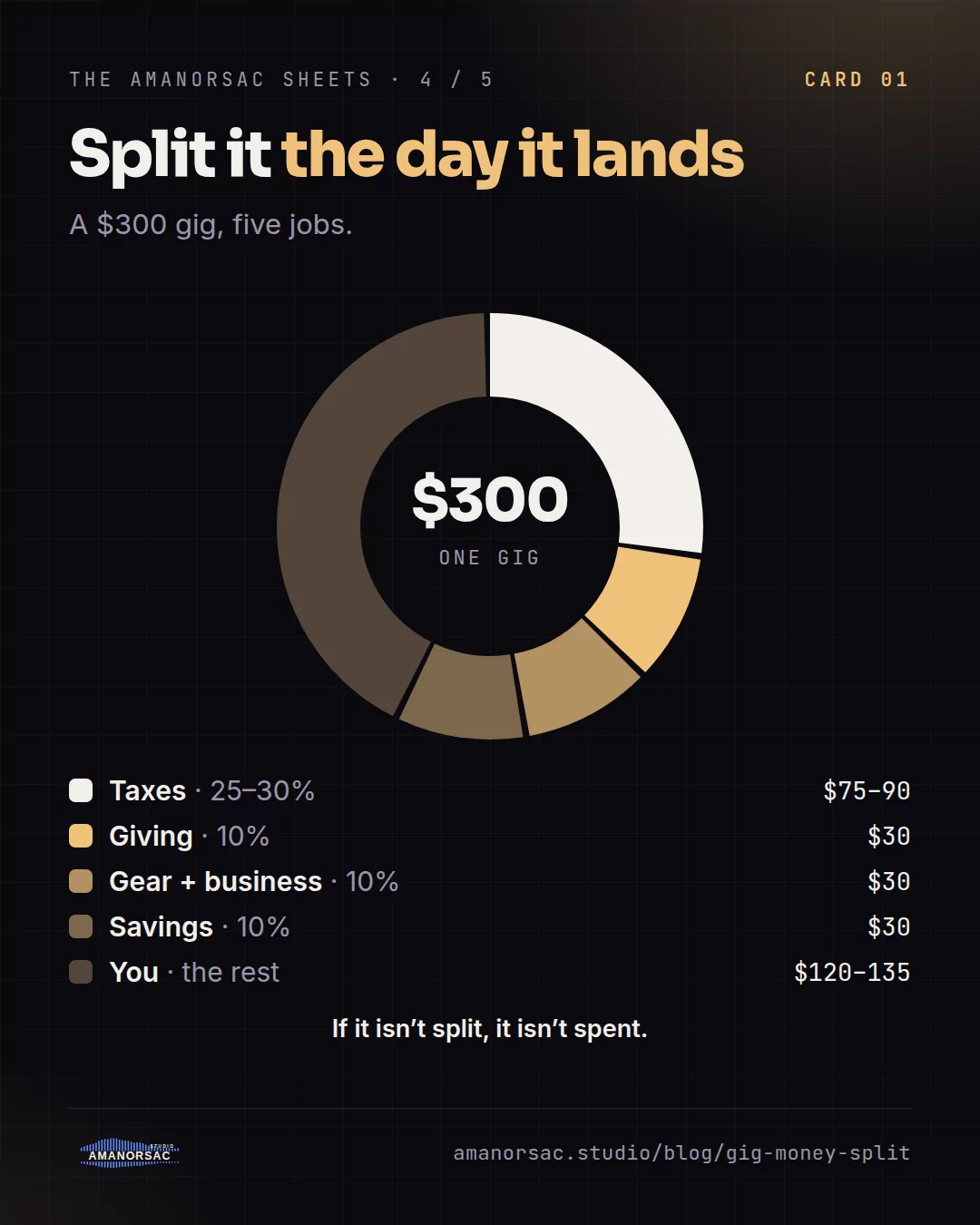
Here is a $300 gig. Taxes take 25 to 30 percent, $75 to $90, set aside before you see it as yours. Giving takes 10 percent, $30; if you give, make it first, not leftover. Gear and business take 10 percent, $30, for strings, software, repairs and upgrades. Savings take 10 percent, $30, and the emergency fund comes first. The rest, $120 to $135, is you, and you pay yourself on a schedule.
Adjust the numbers, keep the habit. Your tax rate depends on where you live and how much you earn, so check it with a tax professional. The habit of splitting on day one is what matters, and the rule is short: if it is not split, it is not spent.
Three accounts, one afternoon
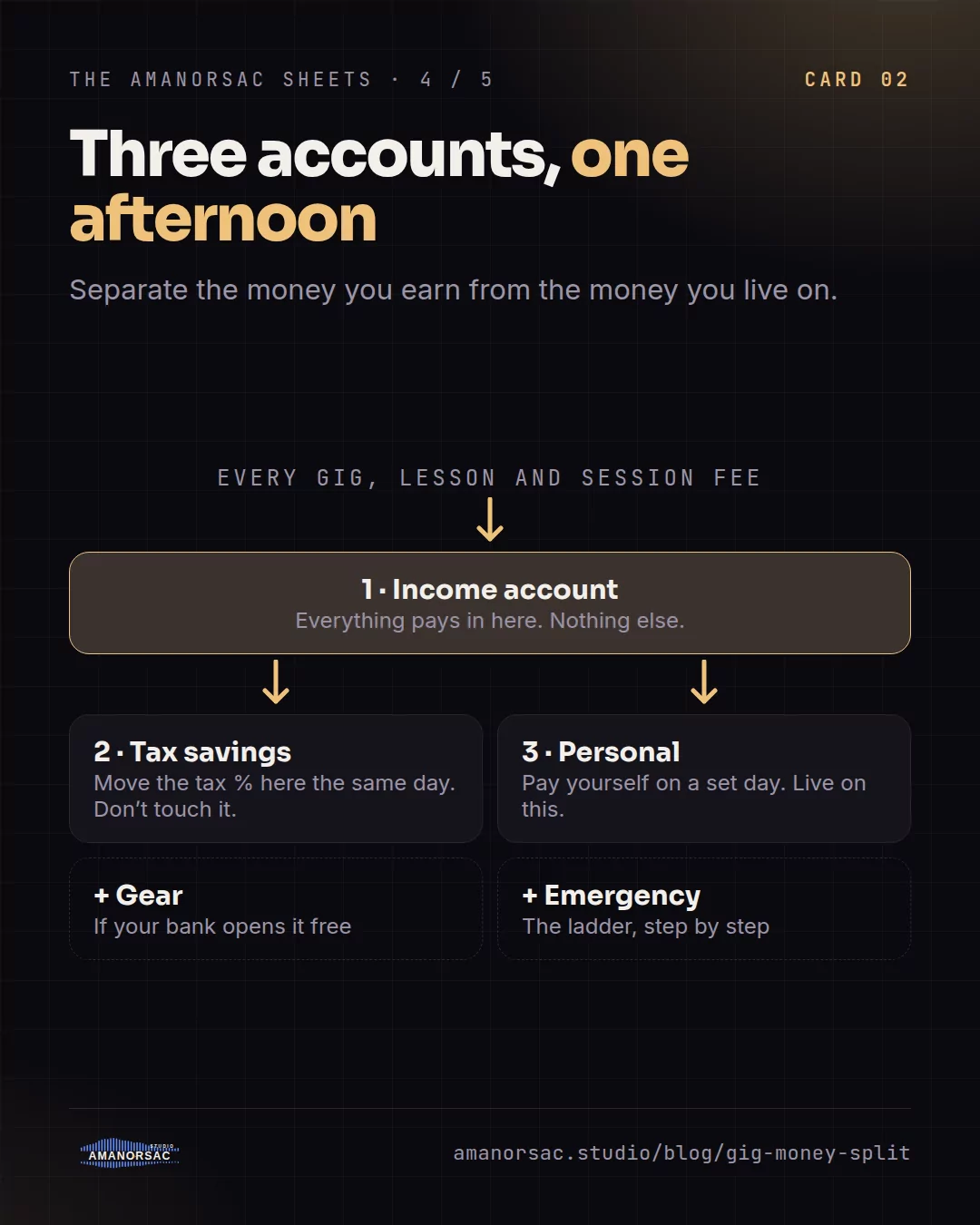
Separate the money you earn from the money you live on. An income account that every gig, lesson and session pays into, and nothing else. A tax savings account that the tax percentage moves into the same day, and that you do not touch. A personal account that you pay yourself into from income on a set day, weekly or every two weeks, and live on. If your bank lets you open them free, add a gear sub-account and an emergency savings account.
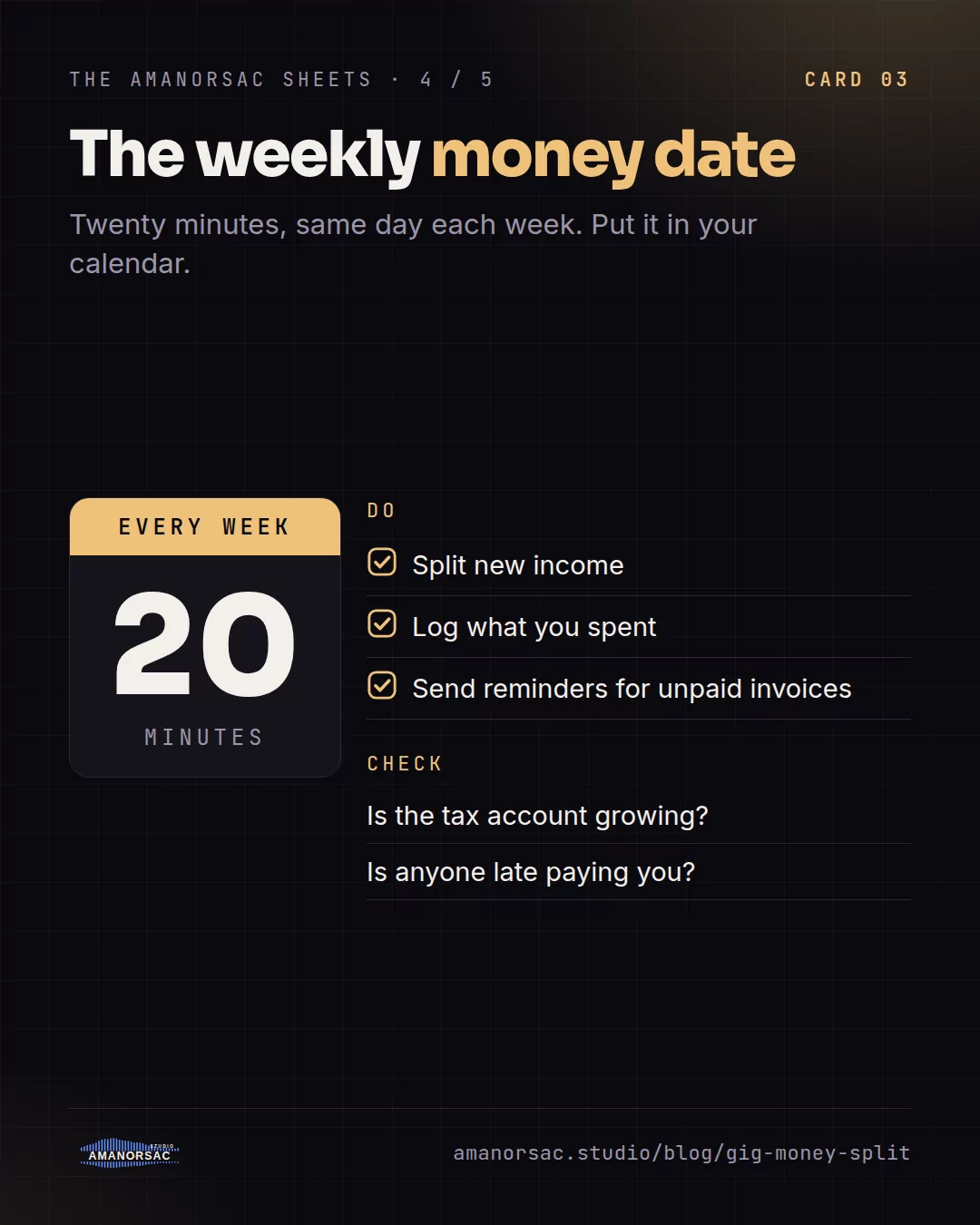
Then a weekly money date: twenty minutes, same day each week, in your calendar. Split new income, log expenses, send reminders for unpaid invoices. Check two things: is the tax account growing, and is anyone late paying you?
Know your numbers before someone asks
The sheet has a rate card to fill in: a performance fee and what it includes, an extra rehearsal, a recording session per song or per hour, lessons, arranging and charts, travel beyond a set distance, and a short-notice fee for anything under 48 hours.
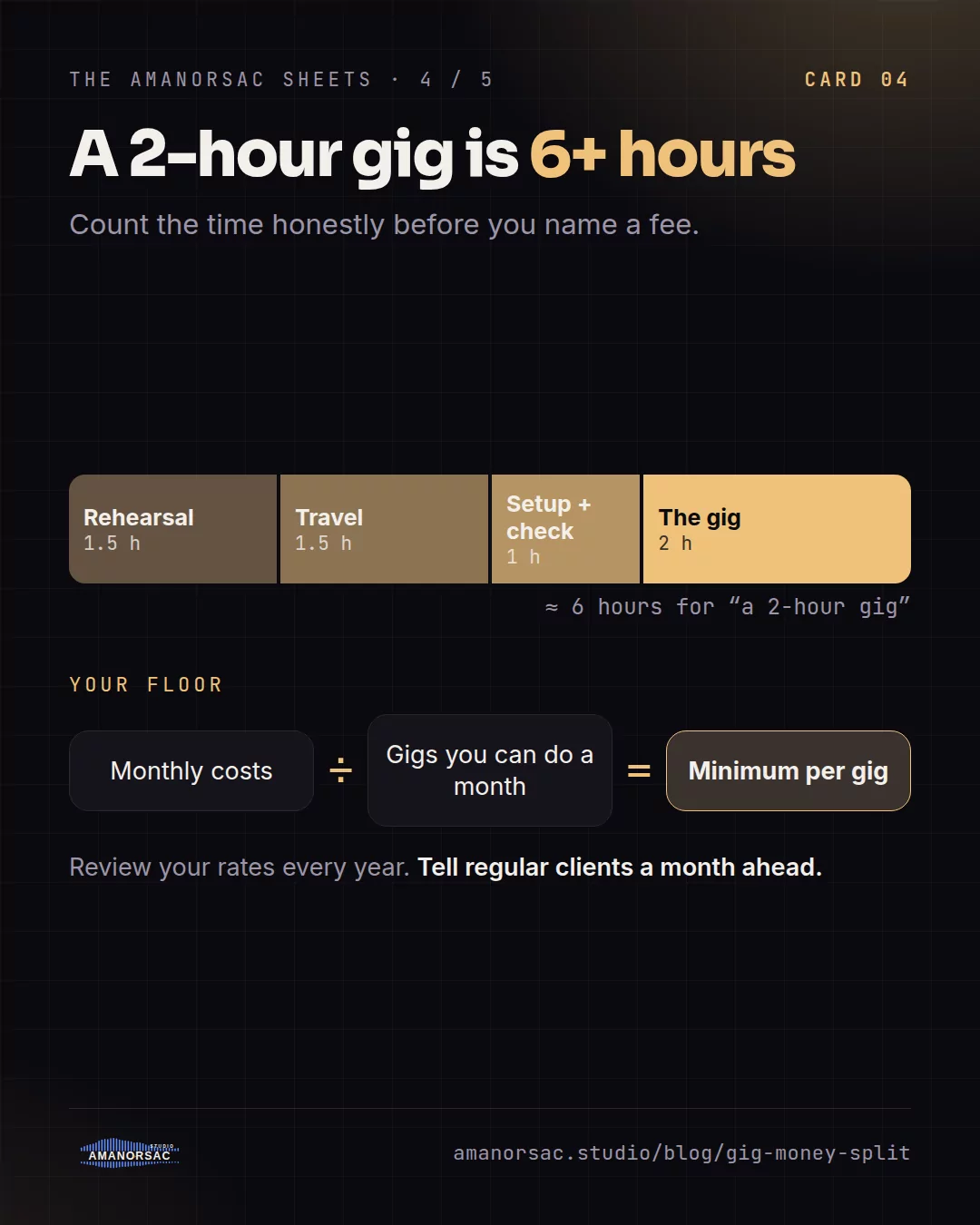
Setting it: your monthly costs divided by the gigs you can actually do in a month is your minimum per gig. Count the time honestly, because a two-hour gig is often six or more hours with rehearsal, travel and setup. Review your rates every year and tell regular clients a month ahead.
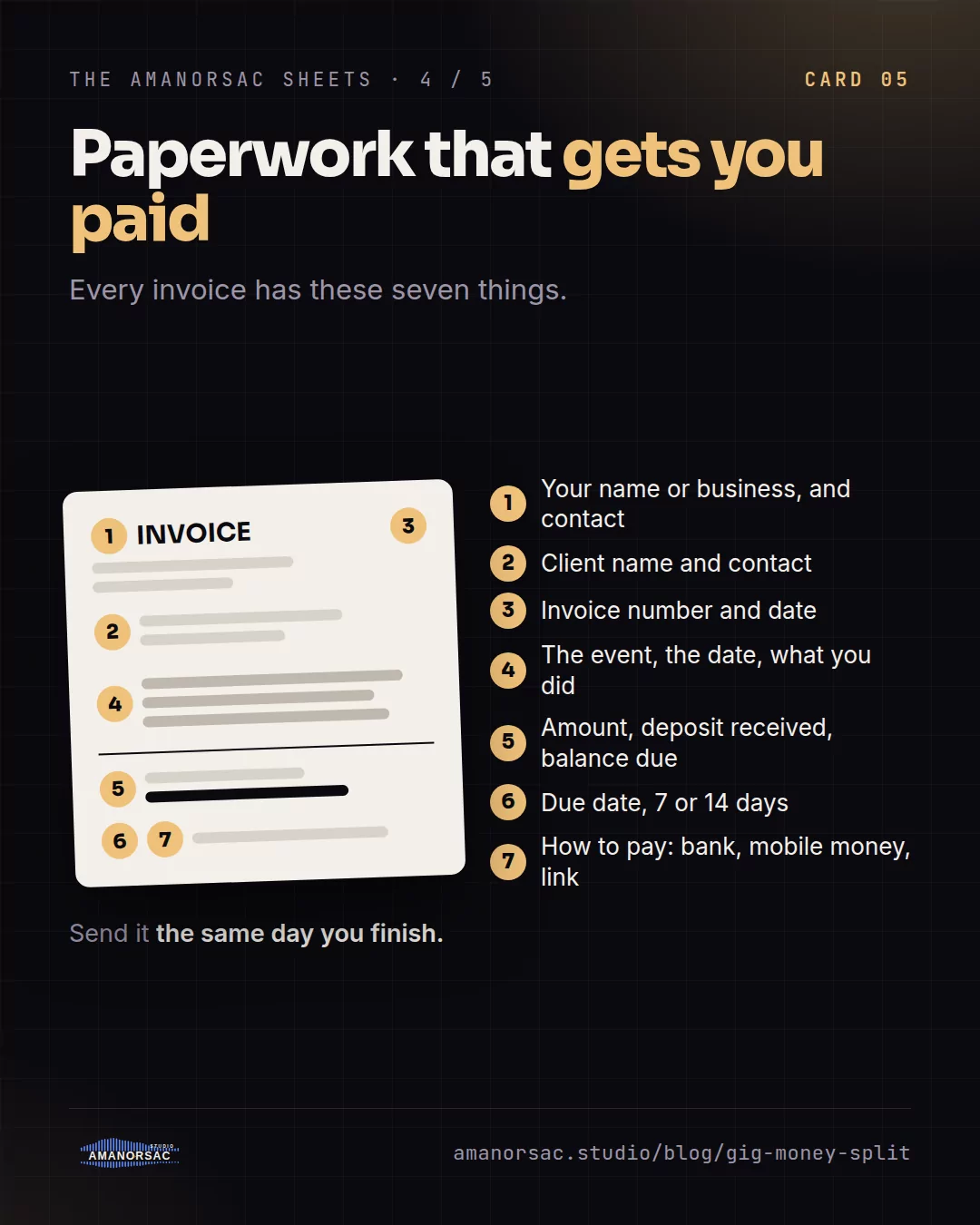
Paperwork that gets you paid
Every invoice has your name or business and contact, the client's name and contact, an invoice number and date, the event, the date and what you did, the amount, the deposit received and the balance due, a due date, and how to pay you, whether that is bank, mobile money or a link.
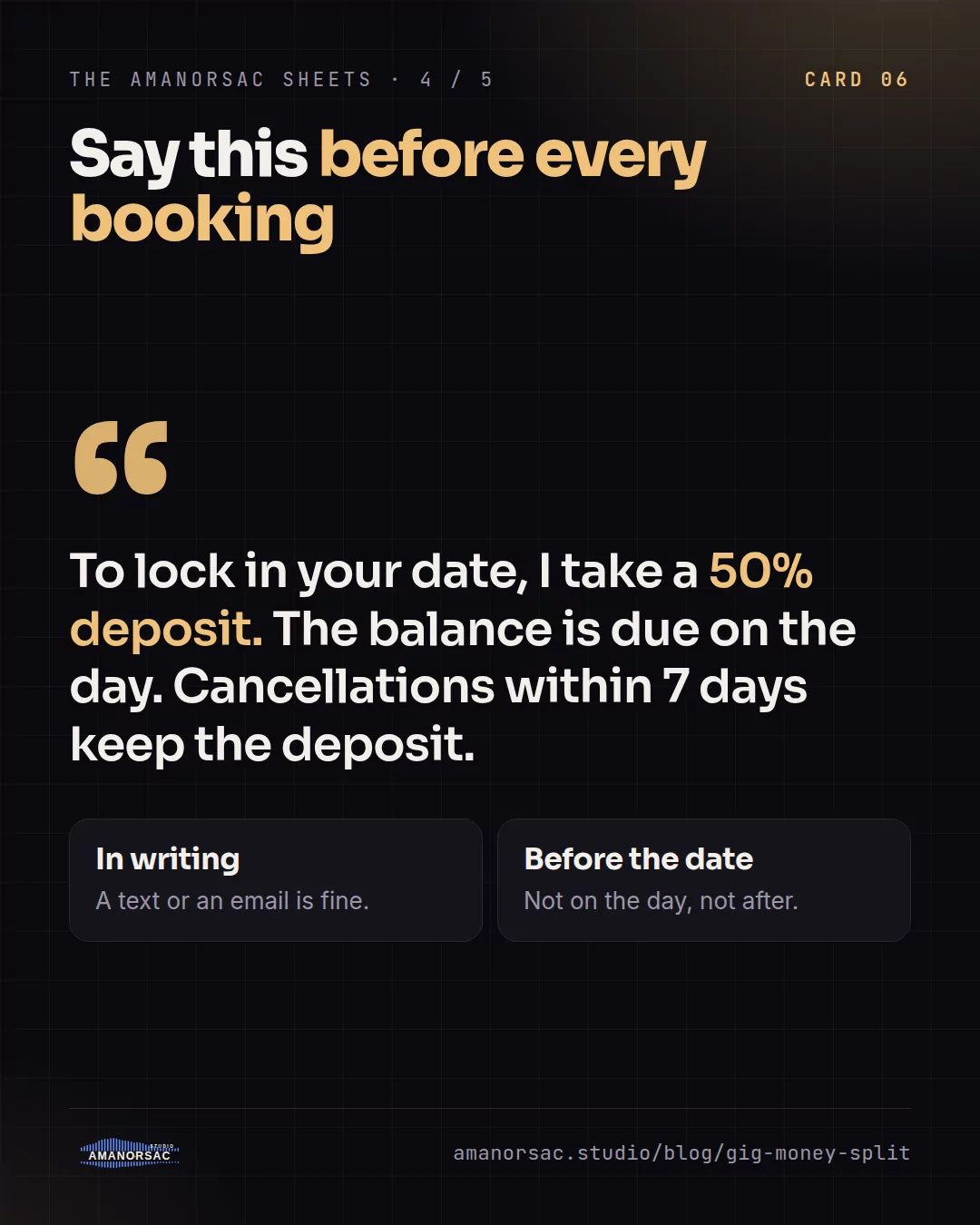
And a sentence to say before every booking: "To lock in your date, I take a 50 percent deposit. The balance is due on the day. Cancellations within seven days keep the deposit." Agree the terms in writing before the date, even if it is just a text or an email, and send the invoice the same day you finish.
Log what you spend
Track everything you spend on music, with the receipt. Gear and repairs. Strings, sticks and reeds. Software and plugins. Subscriptions. Travel and mileage. Lessons and courses. The music share of your phone and internet. Stage clothes. Ask a tax professional what you can claim where you live. The answer is usually more than you think, and only if you logged it.
The emergency fund ladder
Gigs get cancelled. Seasons go quiet. This fund is what means you never take a bad gig out of panic. Step one is a $500 starter, enough for a repair or a cancelled weekend. Step two is one month of essential costs: rent, food, transport, phone. Step three is three months, and a slow month stops hurting. Step four is six months, which is full peace of mind for a freelance musician.
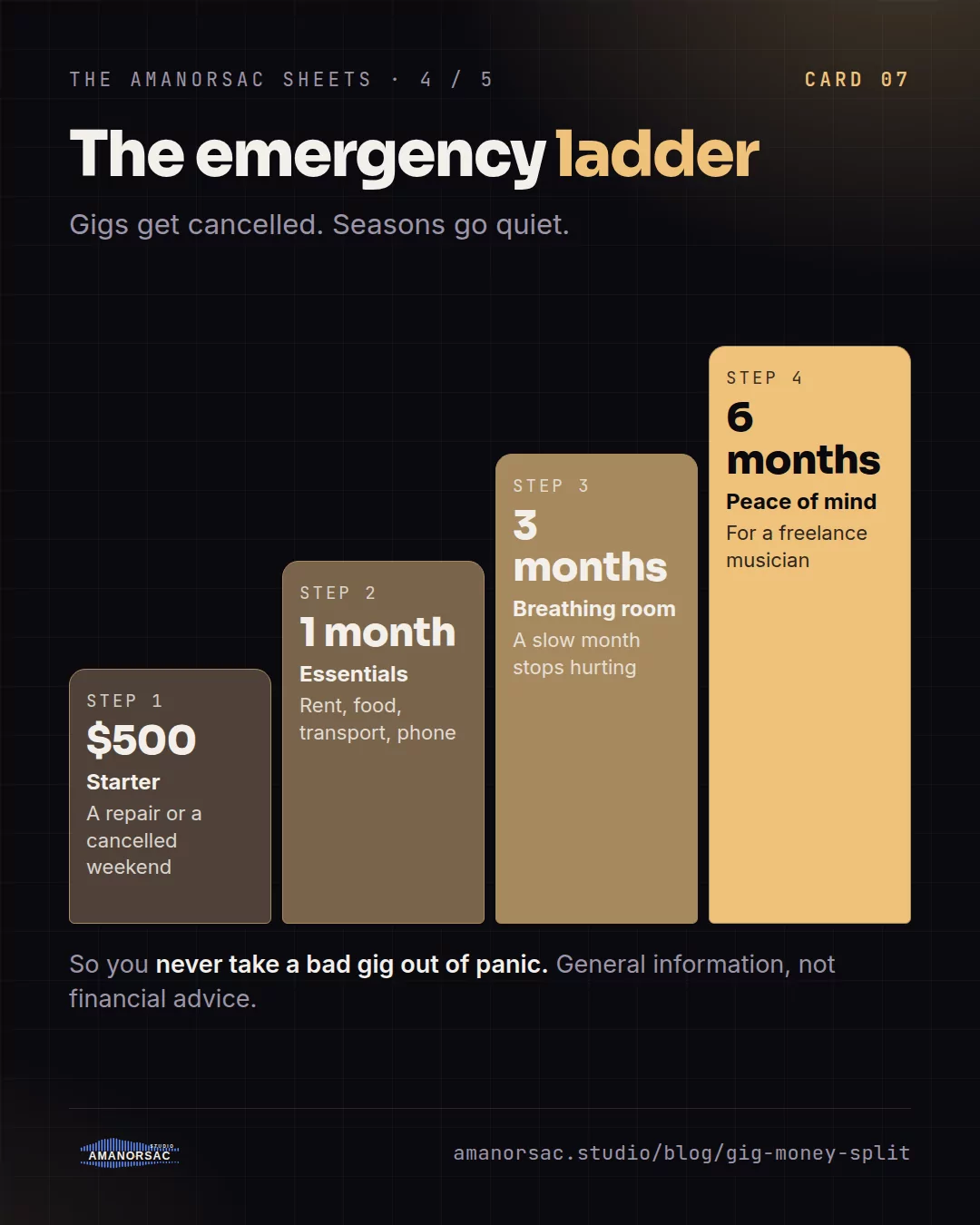
This is general information, not financial advice. Talk to a qualified professional about your own situation.
Get the sheet
The Gig Money Split is nine pages: the split, a gig calculator to fill in each month, the account setup, the rate card, the invoice and booking checklist, an expense log and the emergency fund ladder. Set up your accounts this week. Future you will thank you.
Download the Gig Money Split (PDF)
Next in the series: The Musician Body Check, for the instrument you cannot replace.
Written by Stephen Amanor Sackey — producer, mix engineer and music director, Virginia. More about the studio.