

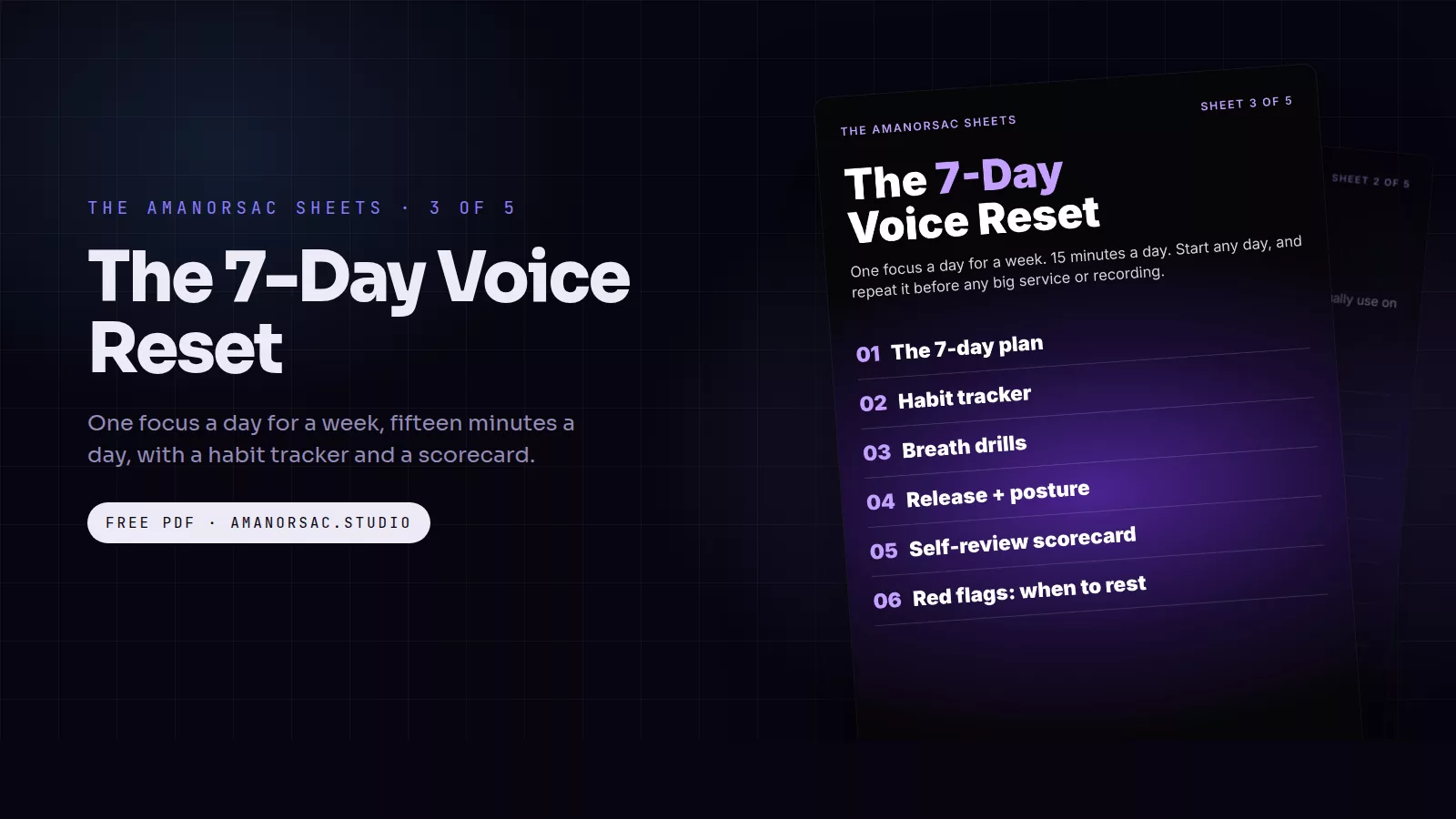
Most singers I work with do not need more lessons. They need a week where the voice gets one clear job a day, fifteen minutes at a time, and a way to hear whether it worked. That is the 7-Day Voice Reset, the third of the five free sheets. Start it on any day. Repeat it before any big service, concert or recording.
Every day starts with a light five-minute warm-up: lip trills, hums, sirens. Then the focus drill for the day.
Every card in this post is free to save and share. Tap one to open it full size.
The seven days
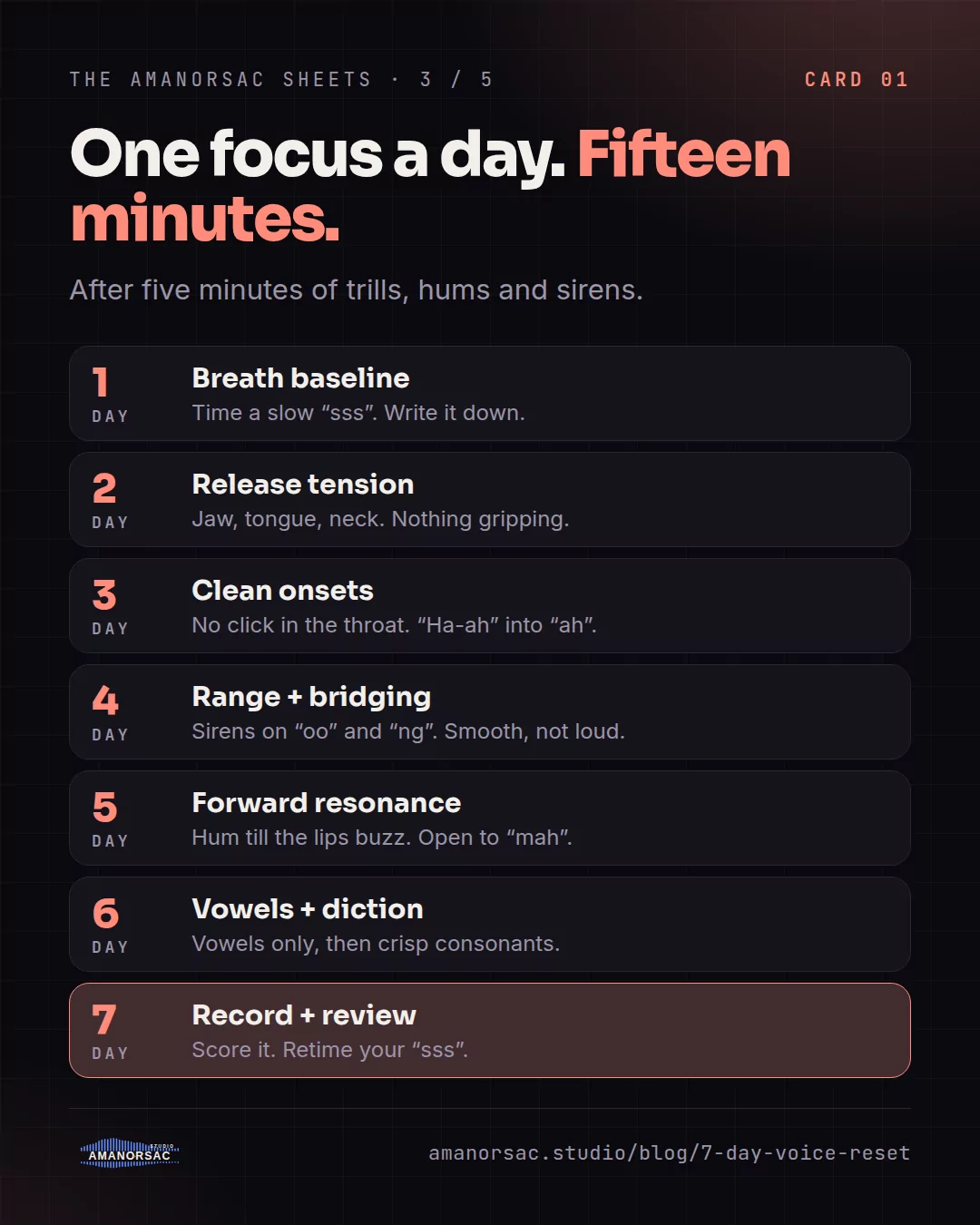
Day one is the breath baseline. Time a slow "sss" on one breath and write the number down. You will beat it by day seven.
Day two is release. Jaw, tongue, neck. Then sing one song checking that nothing is gripping.
Day three is clean onsets. Start vowels gently, with no hard click in the throat. Practise "ha-ah" sliding into "ah".
Day four is range and bridging. Sirens on "oo" and "ng" through your break, slowly. Smooth, not loud.
Day five is forward resonance. Hum "mm" until your lips buzz, then open to "mah" and keep the buzz in the face.
Day six is vowels and diction. Sing a verse on vowels only, then add the consonants back, crisp and short.
Day seven is record and review. Record a full song, score it with the scorecard, and retime your "sss".
The habits build the voice more than any lesson
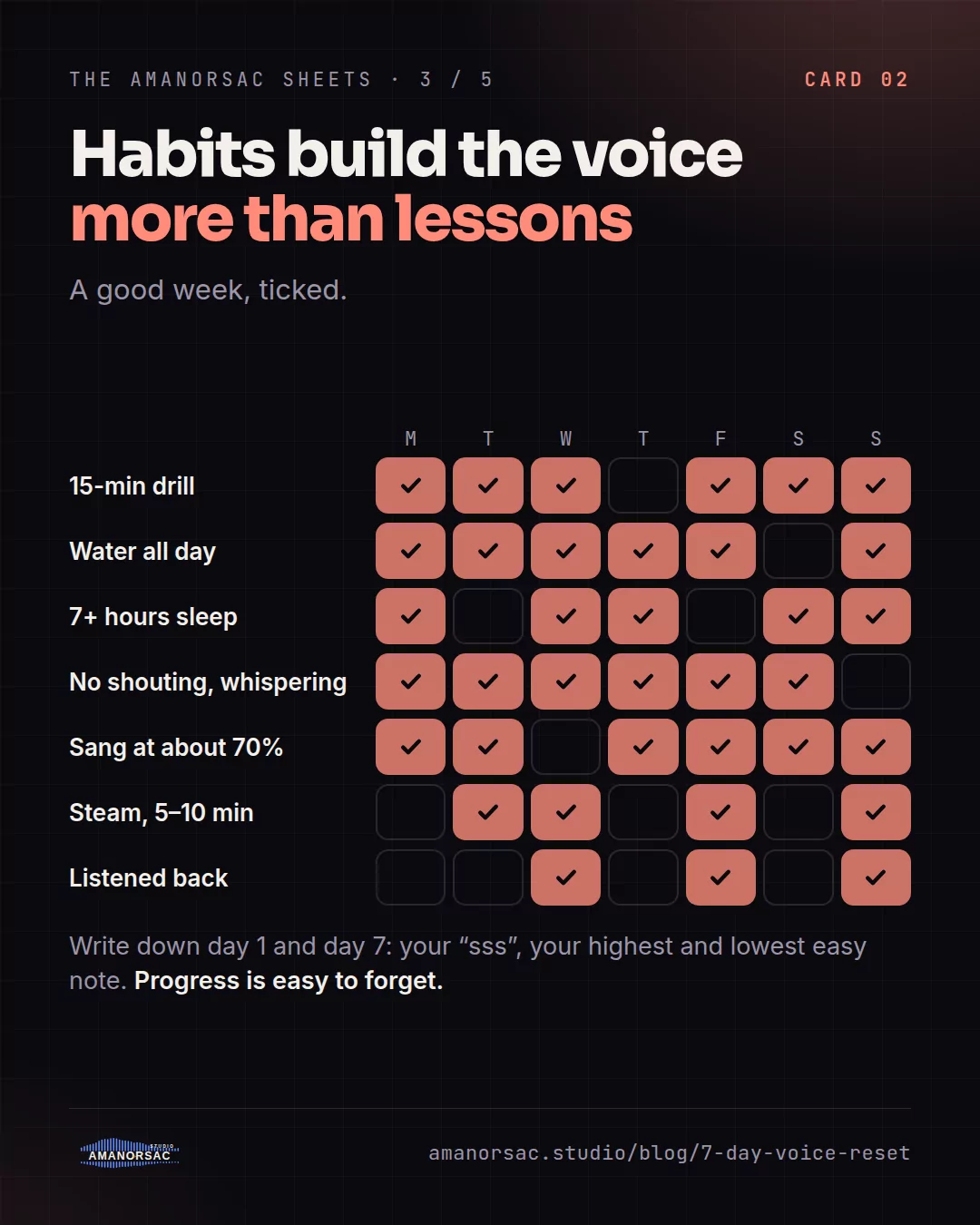
The sheet has a tracker for the week, and it is deliberately not about singing. Fifteen minutes of warm-up or drill. Water through the day. Seven or more hours of sleep. No shouting and no whispering. Singing at about seventy percent in practice. Five to ten minutes of steam. Listening back to yourself.
There is also a before-and-after box: your "sss" time, your highest easy note, your lowest easy note, and how the voice feels from one to five, on day one and on day seven. Progress is easy to forget. Write it down.
Breath drills
Support comes from steady air, not from pushing harder. Lie down with a book on your belly and breathe so the book rises while the shoulders stay still. Ten breaths. That is the breath you want standing up.
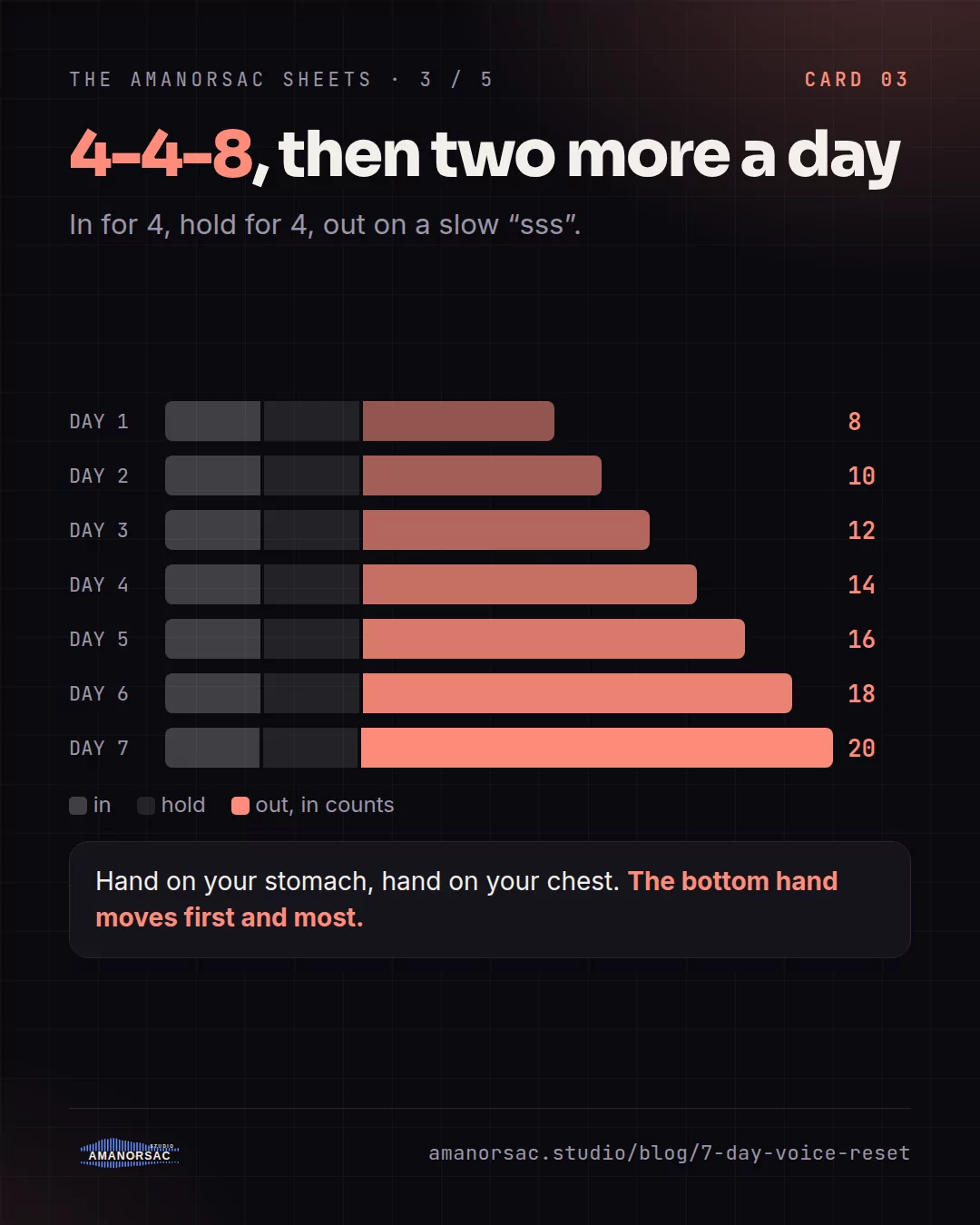
Then 4-4-8: in for four, hold for four, out on "sss" for eight. Add two counts to the out-breath each day. Count out: breathe in, then count out loud, steadily, and stop before you squeeze.
Two things for the band. Mark your breaths in the lyrics with a tick, and breathe where the meaning breaks, not where you run out. And if you are in the backing vocals or the choir, never all breathe in the same place on a long note. Agree who breathes where.
A quick check: one hand on your stomach, the other on your chest. On the in-breath, the bottom hand should move first and most.
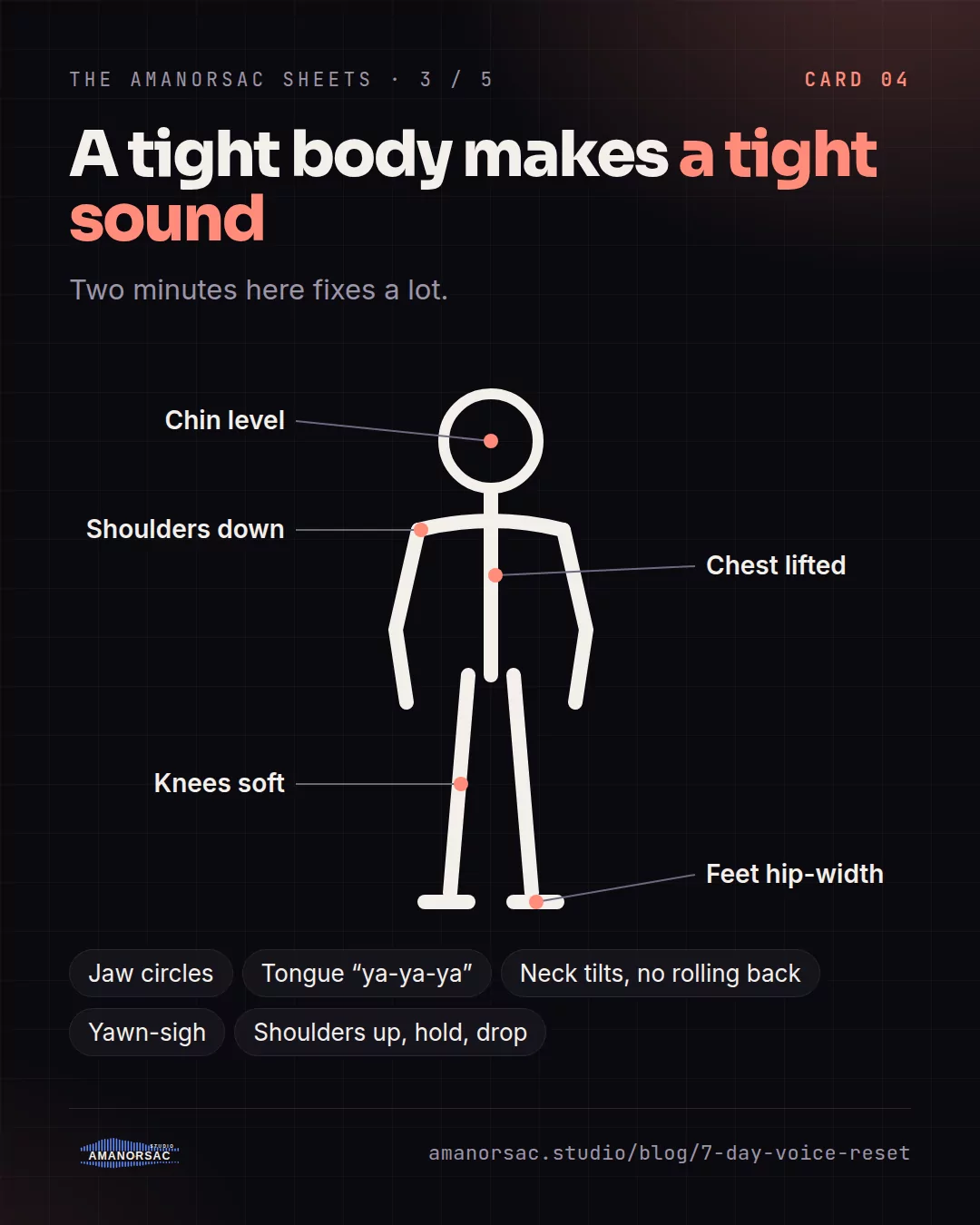
A tight body makes a tight sound
Two minutes here fixes a lot. Massage the jaw hinge in small circles and let the mouth fall open. Tongue out and down, say "ya-ya-ya" without moving the jaw. Slow ear-to-shoulder tilts, five each side, and never roll the head backwards. A big yawn, then a sigh from high to low on "ah". Shoulders up to the ears, hold three seconds, drop, three times.
Posture for singing: feet hip-width apart with the weight even, knees soft and never locked, chest comfortably lifted, shoulders down, chin level. Do not reach up for the high notes. They are not up there.
The scorecard
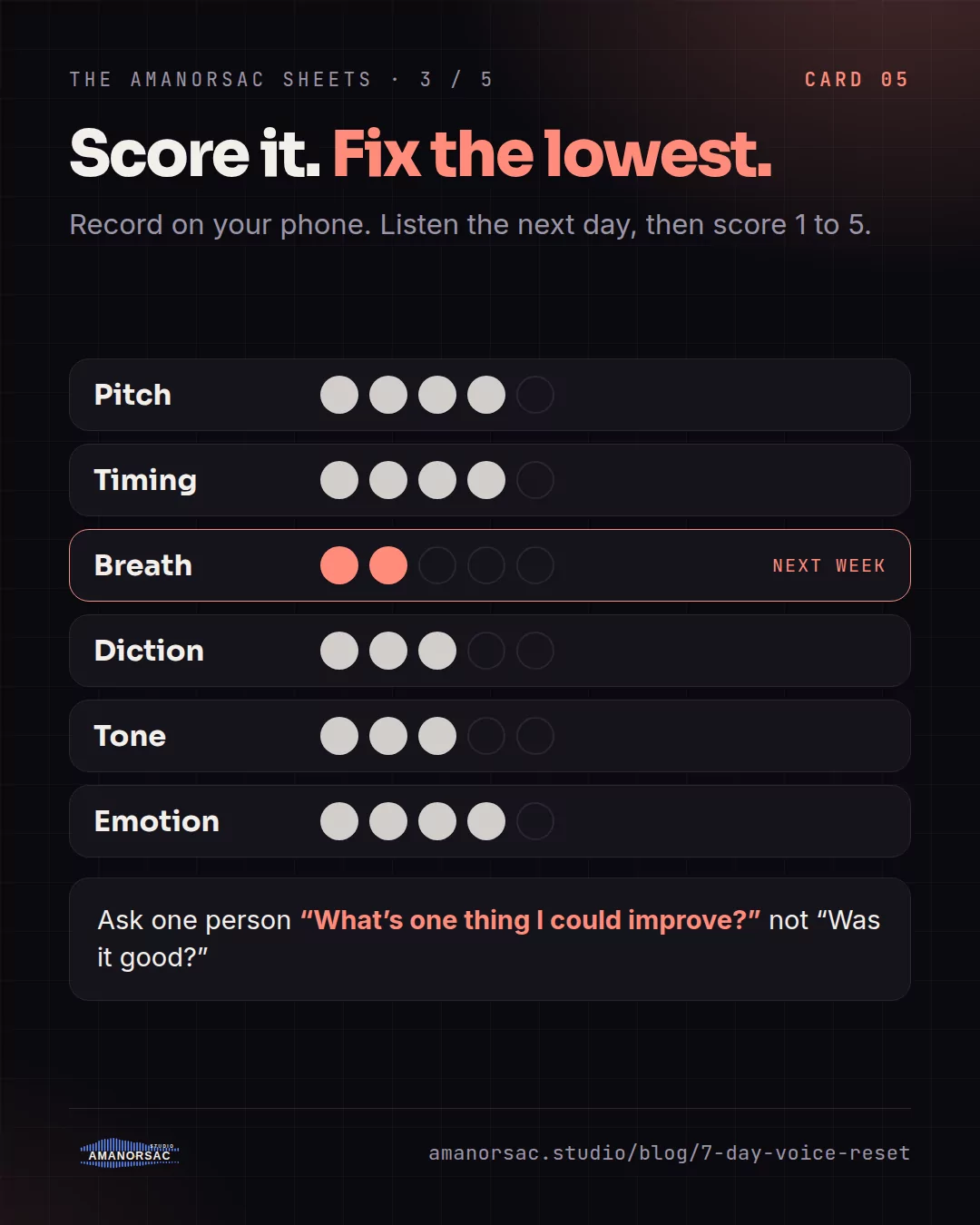
Record on your phone. Listen the next day, once without judging, then score six things from one to five: pitch, timing, breath, diction, tone and whether you believe it. The lowest score is next week's focus. One thing at a time.
Keep your day one and day seven recordings. And ask one trusted singer or leader a single question: "What is one thing I could improve?" Not "Was it good?"
When to rest
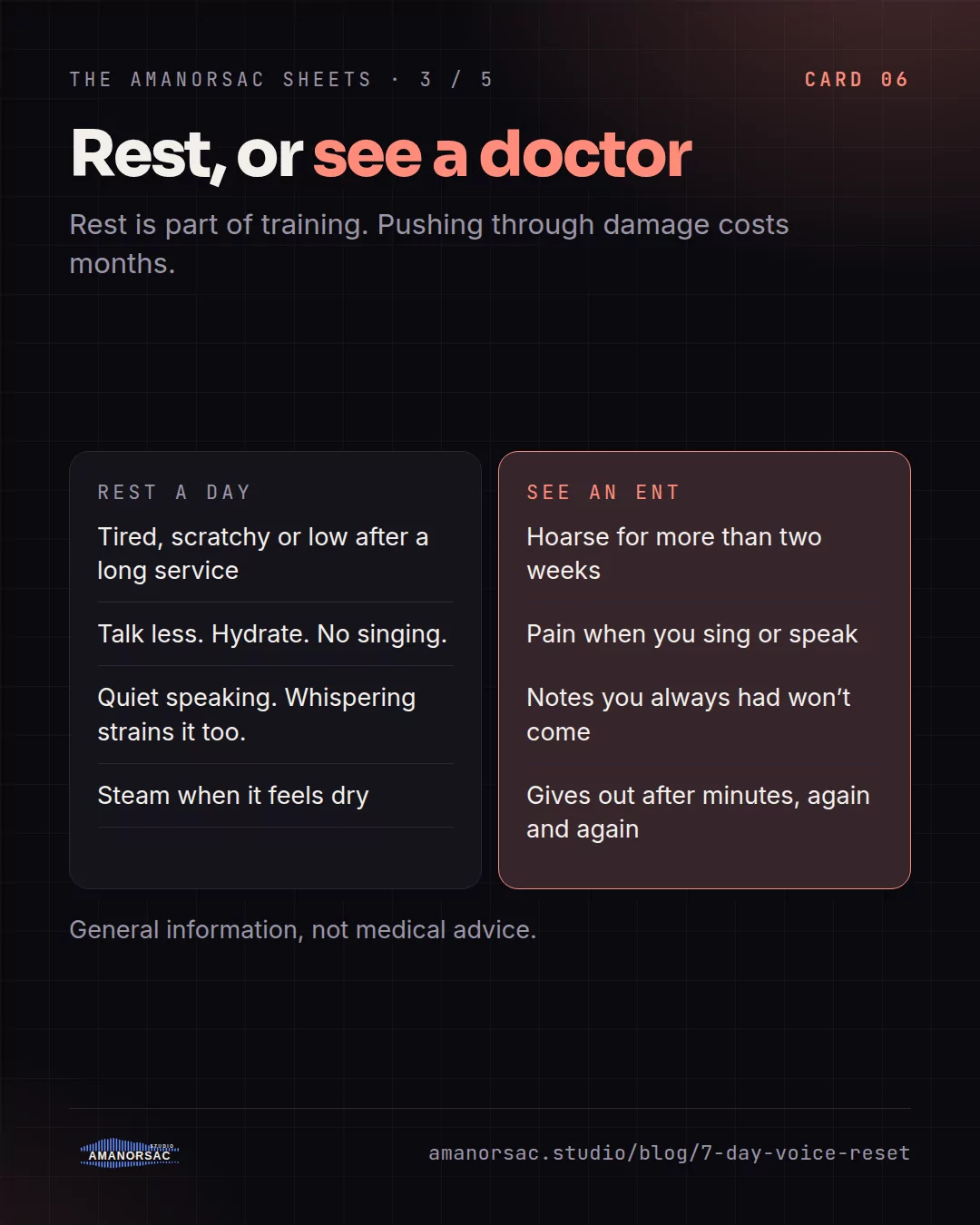
Rest is part of training. Pushing through damage can cost you months. Normal tiredness after a long service means a day off: talk less, hydrate, no singing. Real rest means quiet speaking, not whispering, because whispering strains the voice too. Steam helps when it is dry or tired.
See an ear, nose and throat doctor if hoarseness or a changed voice lasts more than two weeks, if there is pain when you sing or speak, if notes you always had suddenly will not come, or if the voice gives out after a few minutes again and again. This is general information, not medical advice. If anything worries you, see a specialist.
Get the sheet
The 7-Day Voice Reset is eight pages: the plan, the habit tracker, the breath drills, release and posture, the self-review scorecard and the red flags. Repeat the week before anything that matters.
Download the 7-Day Voice Reset (PDF)
Next in the series: The Gig Money Split, where every gig fee should go the day it lands.
Written by Stephen Amanor Sackey — producer, mix engineer and music director, Virginia. More about the studio.