

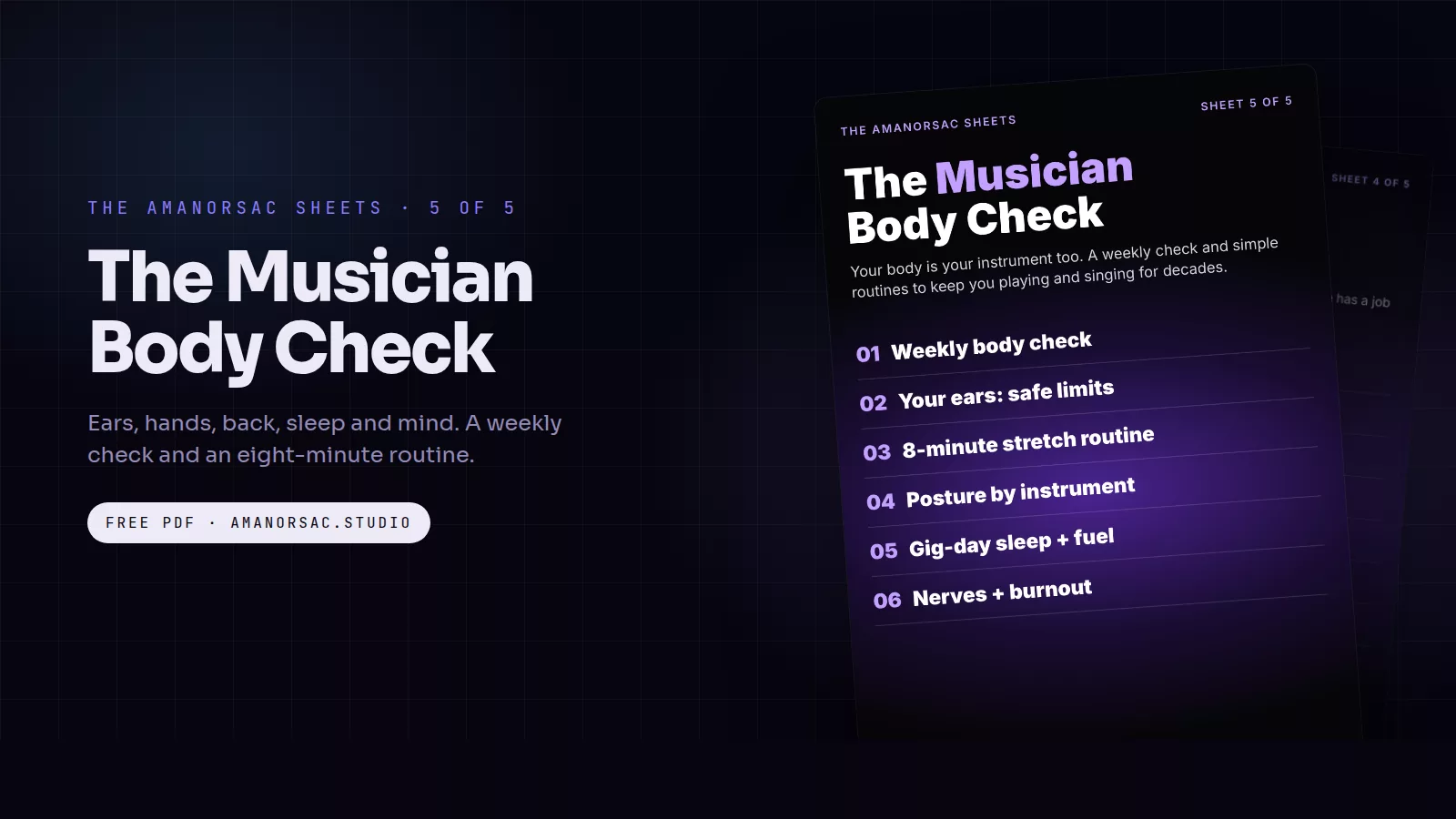
Your body is your instrument too, and it is the one you cannot replace. Hearing damage is permanent and it adds up quietly. A wrist that hurts every Sunday does not fix itself. Burnout arrives dressed as tiredness. The Musician Body Check, the last of the five free sheets, is a weekly check and a few simple routines to keep you playing and singing for decades.
Every card in this post is free to save and share. Tap one to open it full size.
The weekly check
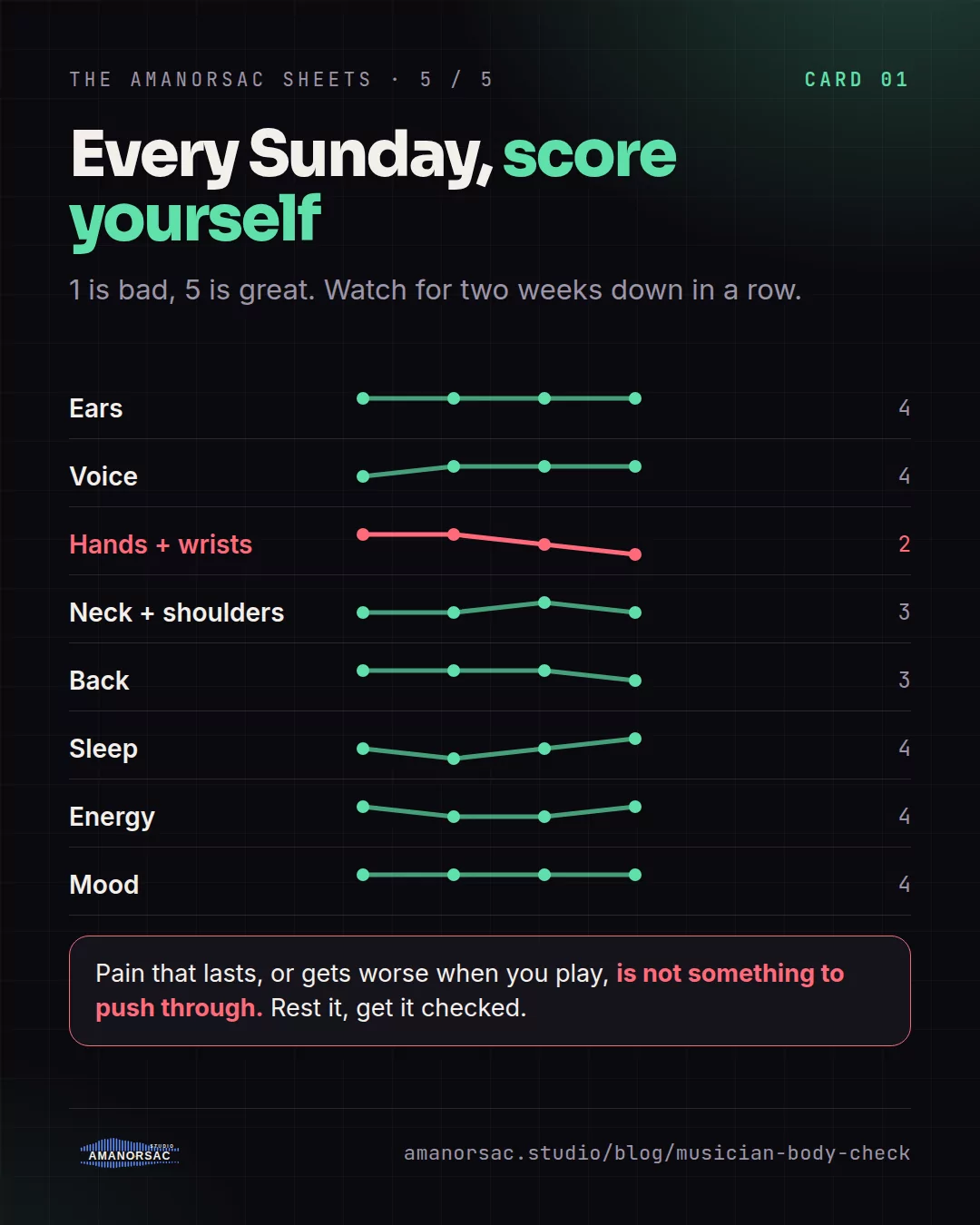
Every Sunday night, score eight things from one to five: ears (any ringing or muffling after?), voice (tired, hoarse?), hands and wrists, neck and shoulders, back, sleep, energy, and mood and motivation. Watch for anything dropping two weeks in a row.
The rule: pain that lasts, or gets worse when you play, is not something to push through. Rest it and get it checked early.
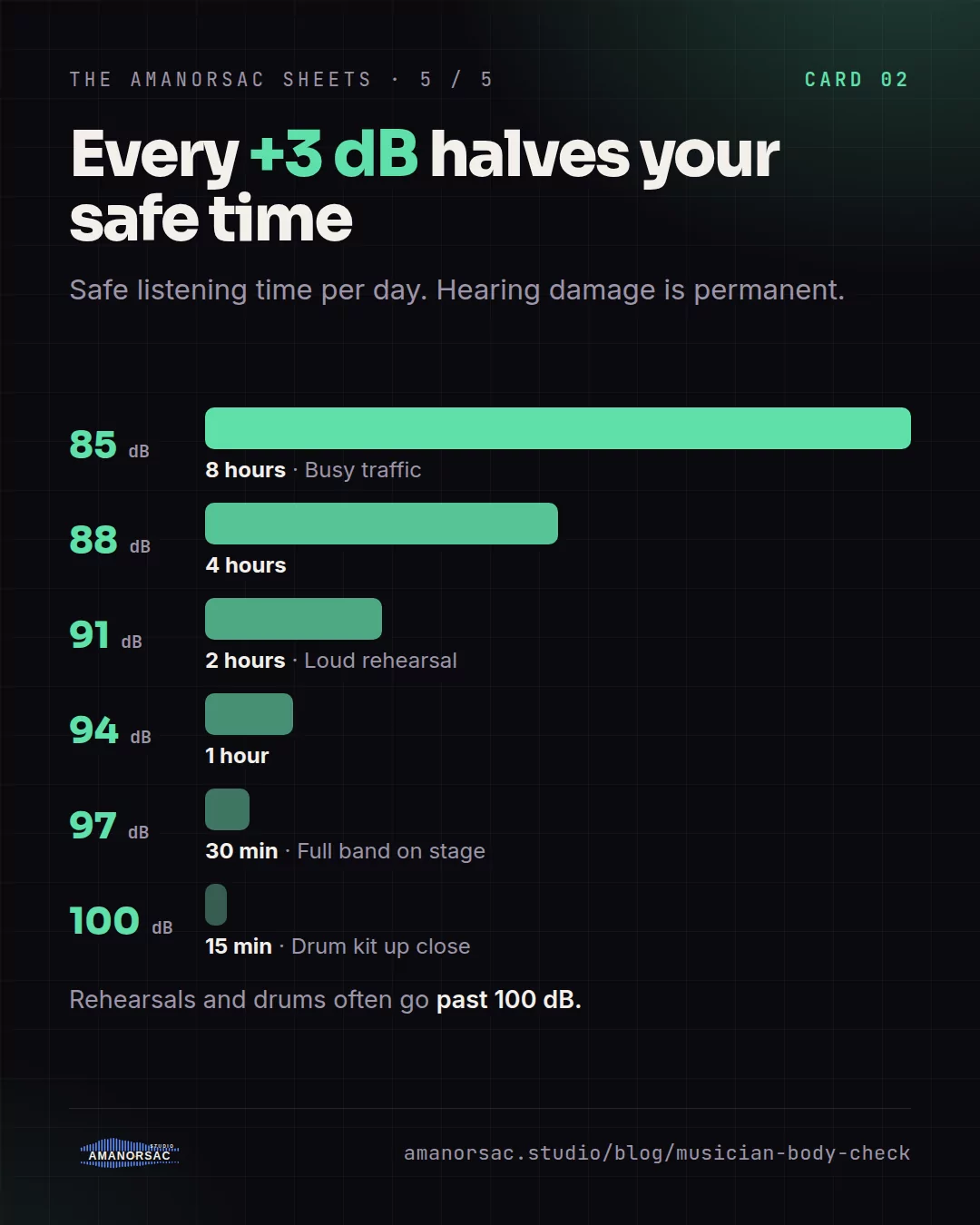
Your ears: every three decibels halves your safe time
At 85 dB, about the level of busy traffic, you have eight hours a day. At 91 dB, a loud rehearsal, two hours. At 97 dB, a full band on stage, thirty minutes. At 100 dB, a drum kit up close, fifteen minutes. Rehearsals and drums often go past 100.
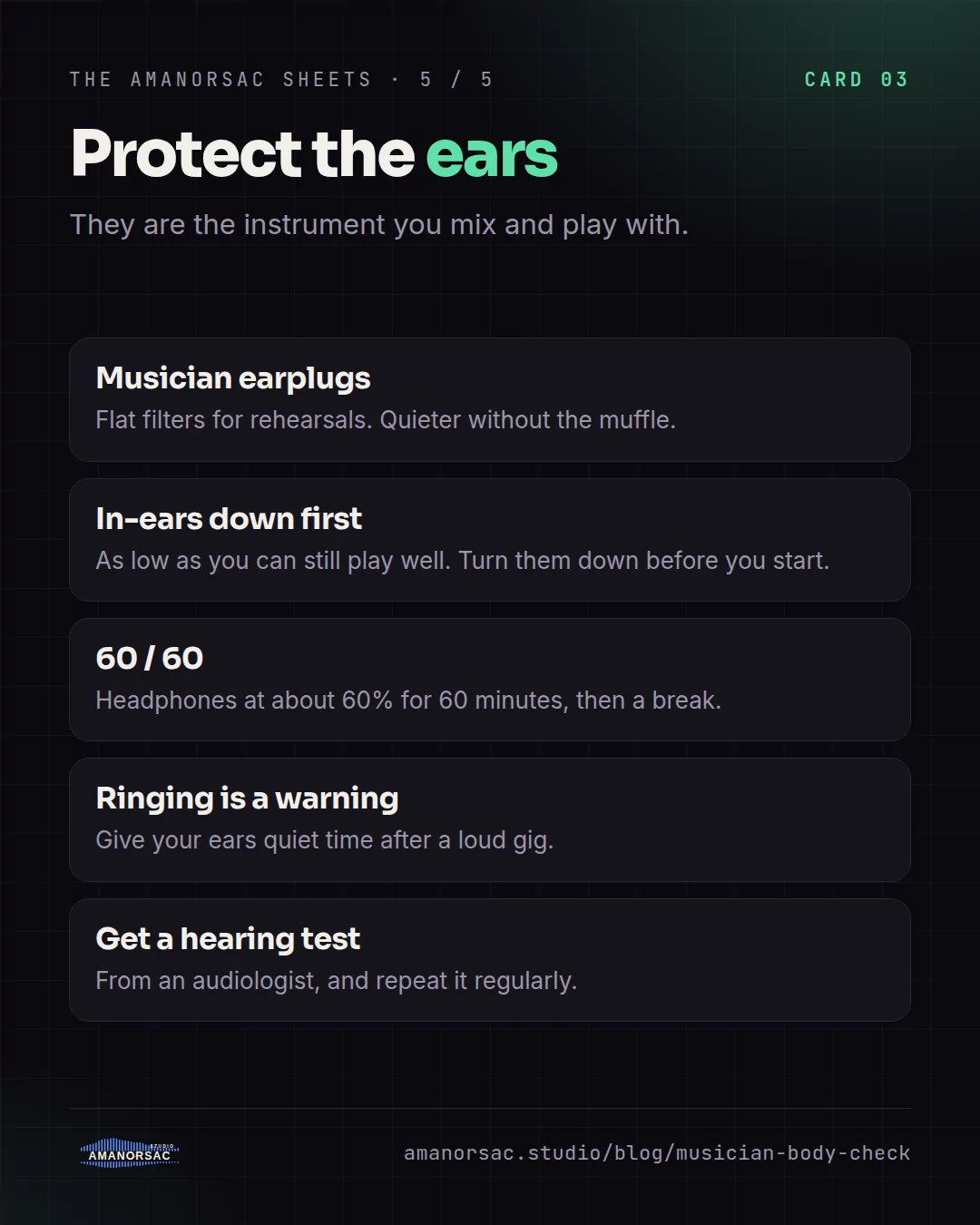
Musician earplugs with flat filters for rehearsals: they lower the volume without making it sound muffled. In-ears as low as you can still play well, and turn them down before you start, not after. Headphones at no more than about sixty percent volume for sixty minutes, then a break. Ringing after a gig is a warning sign, so give your ears quiet time. And get a hearing test from an audiologist, then repeat it regularly.
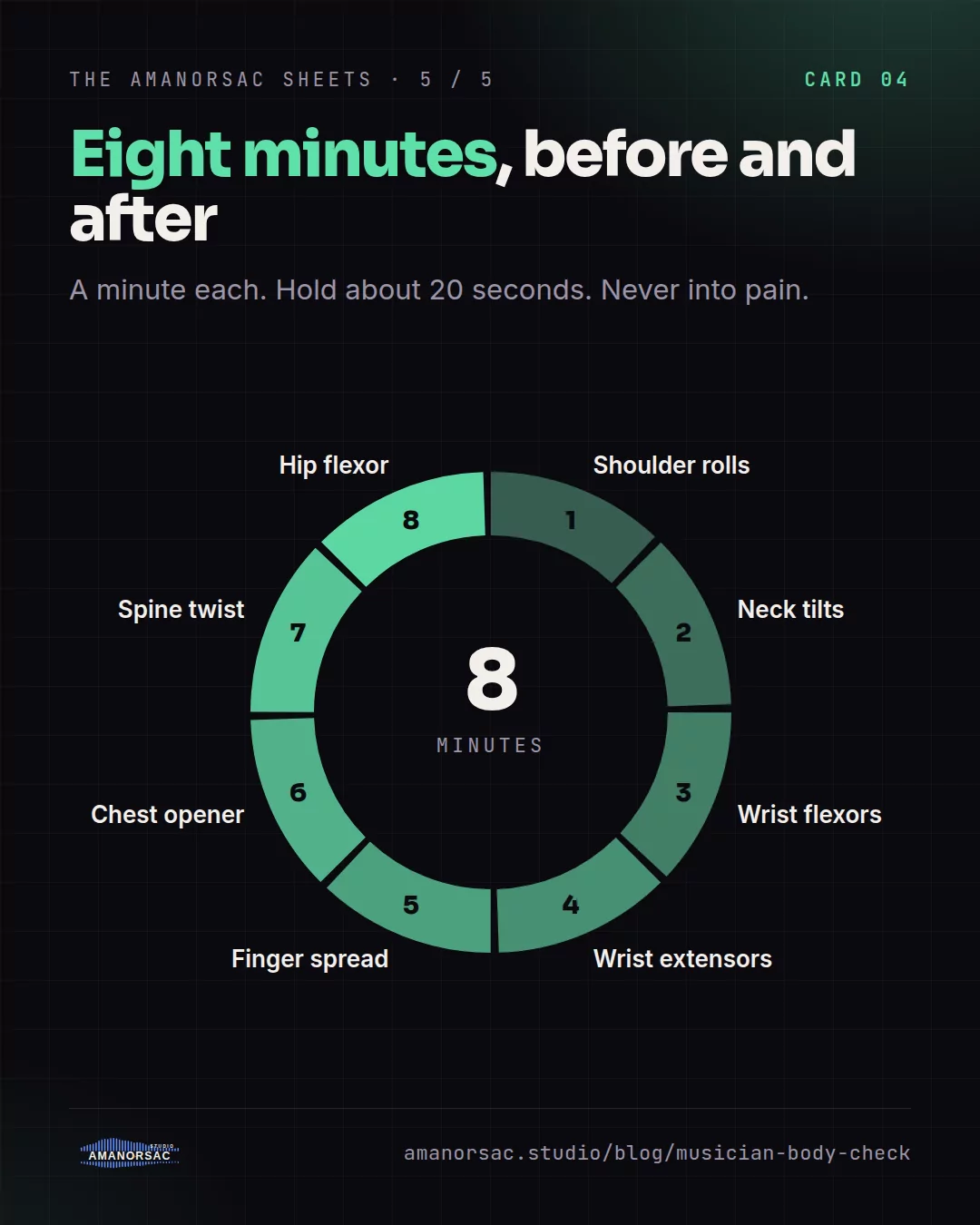
Eight minutes, before and after
Gentle, never into pain, about twenty seconds each. Shoulder rolls, big and slow, back then forward. Neck tilts, ear toward shoulder each side, and no rolling the head backwards. Wrist flexors: arm out, palm up, gently pull the fingers back with the other hand. Wrist extensors: arm out, palm down, gently press the back of the hand down. Finger spread: wide, then a soft fist, ten times. Chest opener: hands clasped behind the back, lift gently, shoulders down. A seated spine twist, breathing. A hip flexor lunge, which is the one you want after a long keyboard or drum set.
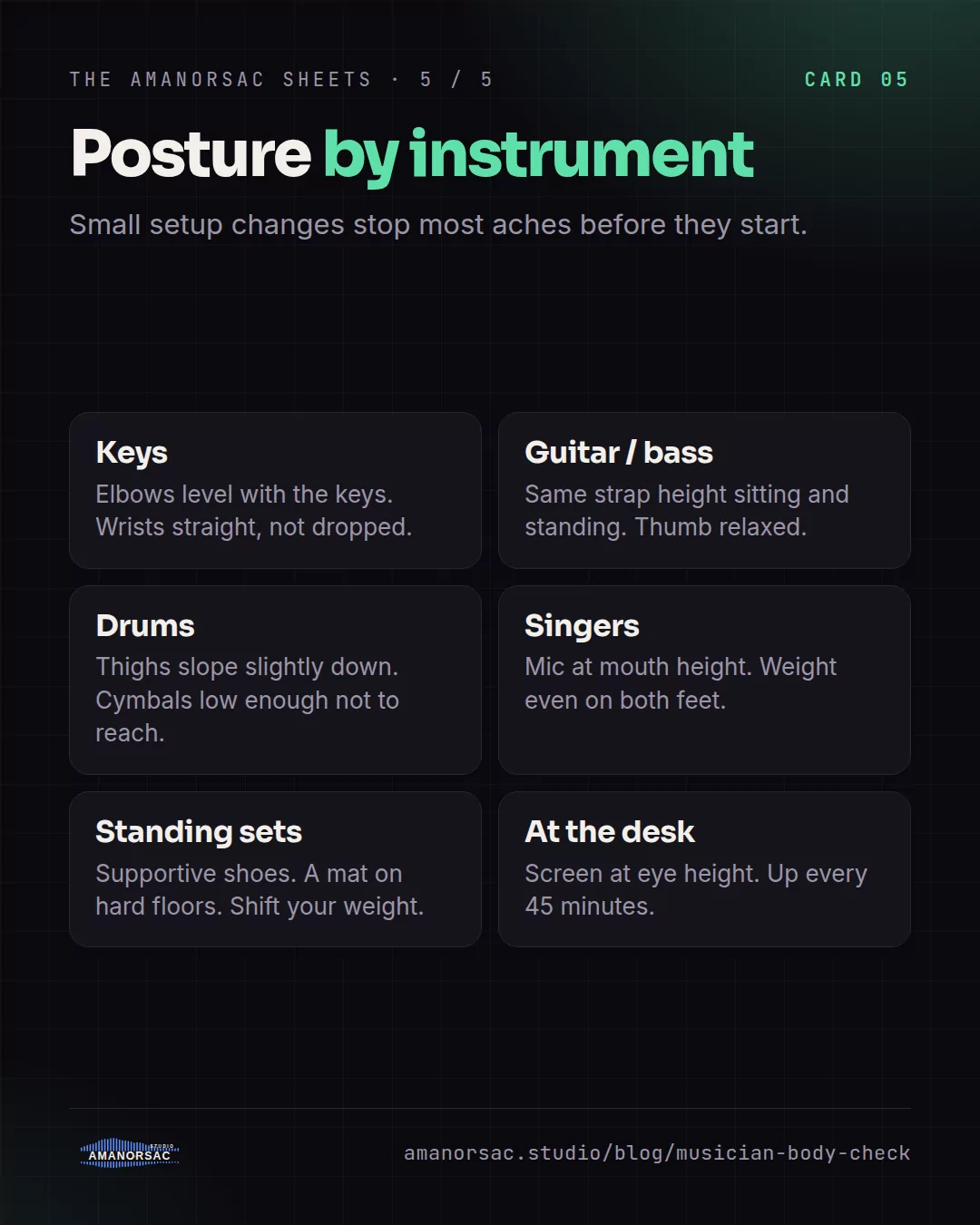
Posture by instrument
Small setup changes stop most aches before they start. Keys: elbows level with or slightly above the keys, wrists straight and not dropped, bench far enough back that you lean in. Guitar and bass: strap at the same height sitting and standing, neck angled up a little, thumb relaxed behind the neck. Drums: throne high enough that the thighs slope slightly down, cymbals low enough that you are not reaching up all night. Singers: mic stand at mouth height so you do not tilt your head, weight even on both feet. Standing sets: supportive shoes, a mat if the floor is hard, and shift your weight. At the desk: screen at eye height, feet flat, and get up every 45 minutes when you are editing or mixing.
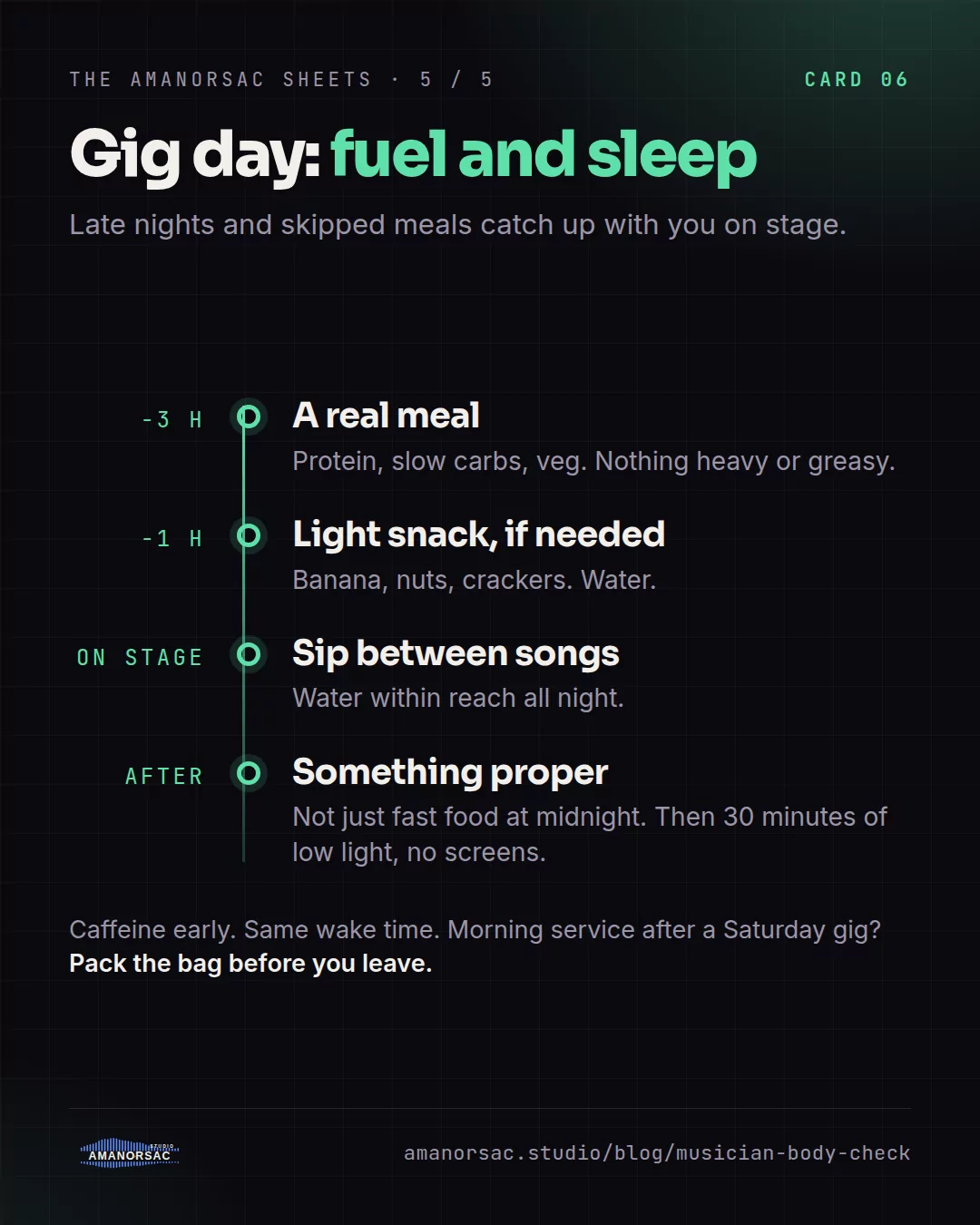
Gig-day fuel and sleep
Three hours before, a real meal: protein, slow carbs, vegetables, nothing heavy or greasy. An hour before, a light snack if you need it, and water. Water on stage, sipped between songs. Afterwards, something proper, not fast food at midnight.
Keep caffeine to earlier in the day so you can sleep after a late gig. After the gig, thirty minutes of low light and no screens before bed. Try to wake at a similar time even after a late night, and nap twenty minutes if you need to. Morning service after a Saturday gig? Pack the bag before you leave on Saturday.
Nerves and burnout
Your mind plays every note too. Before you walk on: box breathing, in four, hold four, out four, hold four, four rounds. The same pre-stage routine every time, because familiar is calm. Tell yourself "I'm ready", not "calm down", because the racing heart is energy, not danger. And the best cure for nerves is knowing the songs cold.
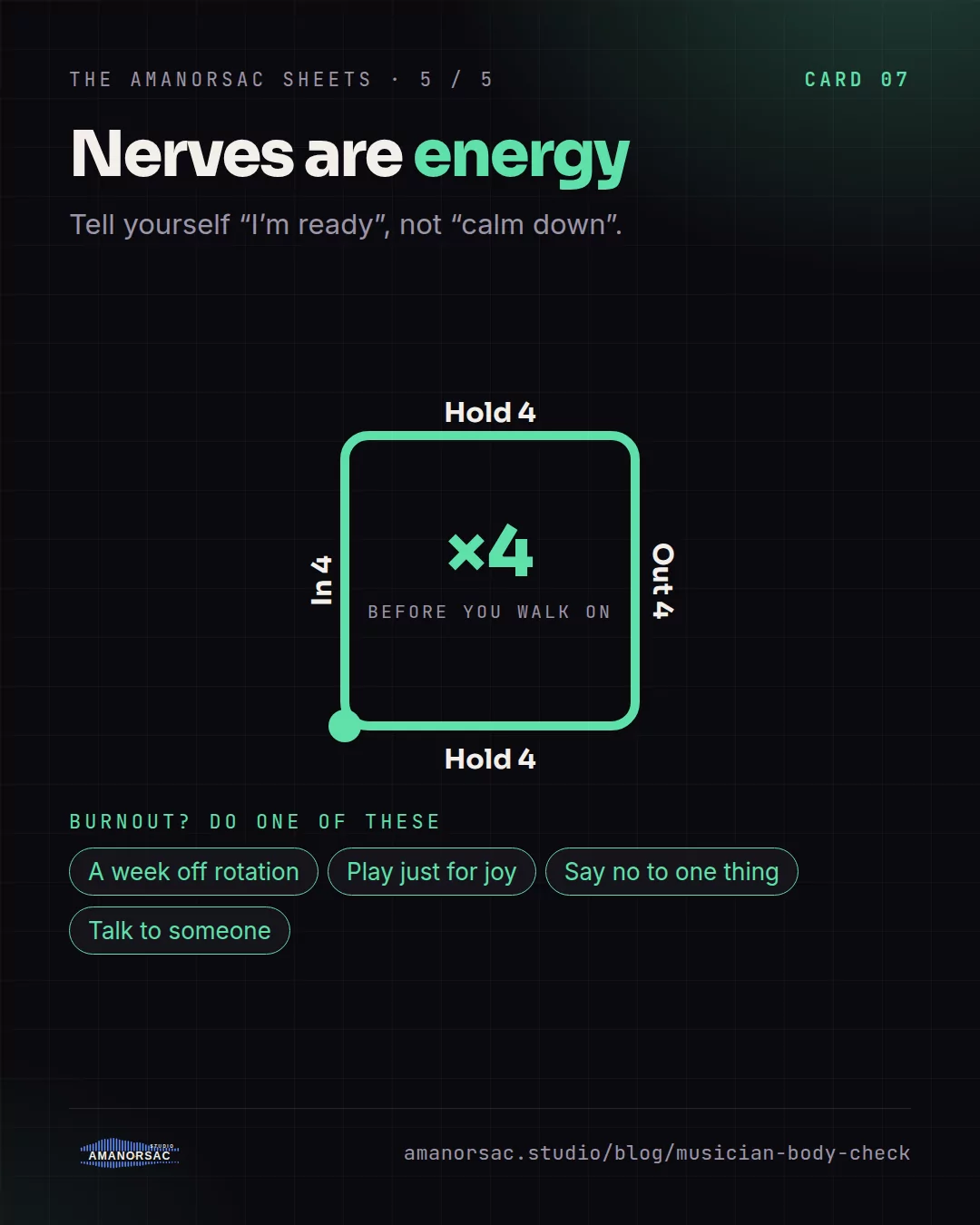
Burnout looks like dreading what you used to love, constant tiredness, being irritable with your team, and playing on autopilot. If that is you: take a week off rotation, play something just for joy, say no to one thing. And talk to someone: your leader, a friend, a pastor, a counsellor. You do not have to carry it alone.
This is general wellbeing information, not medical advice. If you are struggling, please reach out to a health professional.
Get the sheet, and the full series
The Musician Body Check is eight pages: the weekly check, the safe listening limits, the eight-minute stretch routine, posture by instrument, gig-day sleep and fuel, and nerves and burnout. Your career is long. Look after the instrument you cannot replace.
Download the Musician Body Check (PDF)
The whole series, all free: The Live Recording Run Sheet, The Mud-Free Mix Card, The 7-Day Voice Reset, The Gig Money Split and this one. Follow @amanorsac so you catch what comes next.
Written by Stephen Amanor Sackey — producer, mix engineer and music director, Virginia. More about the studio.