
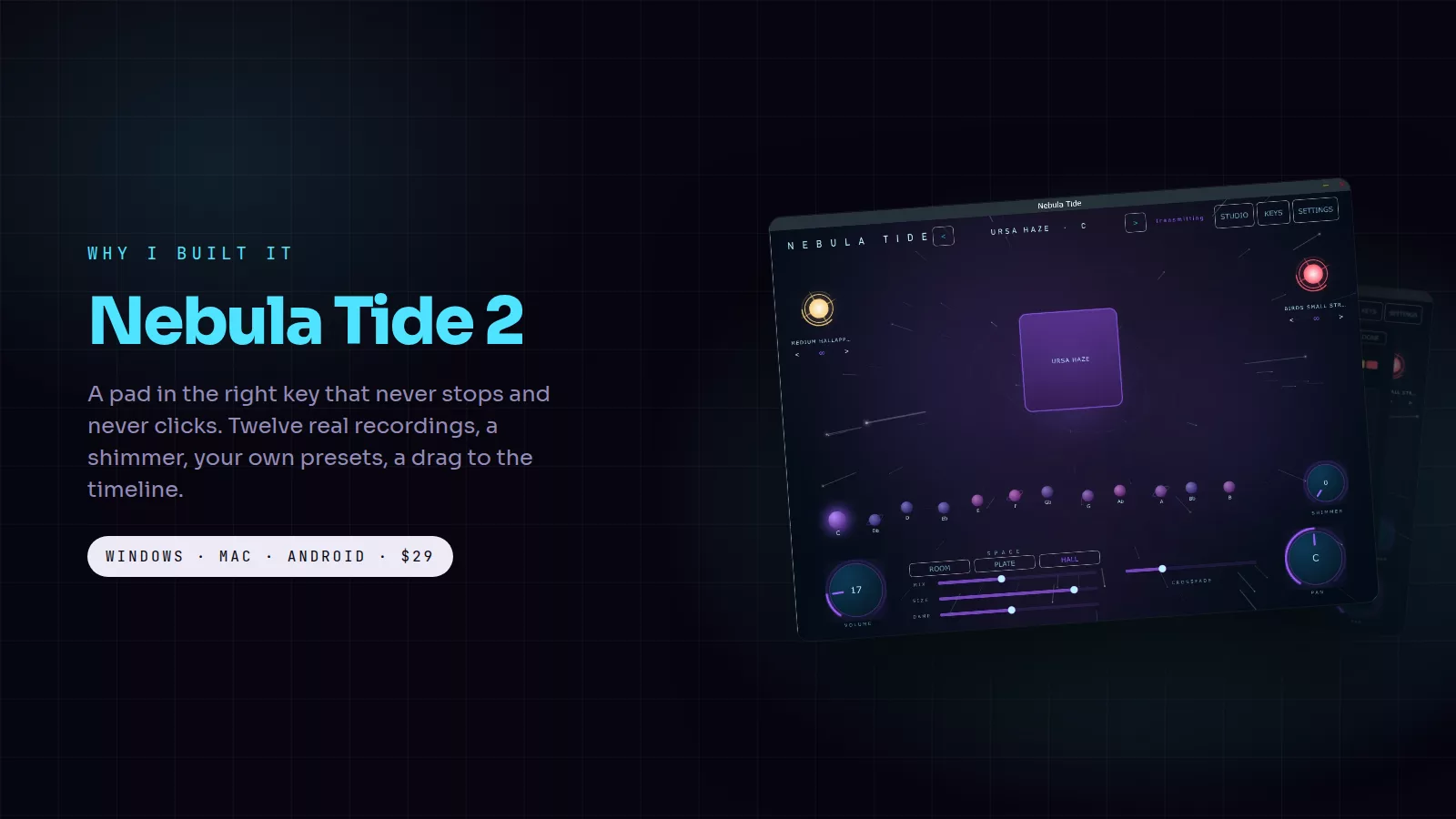
The pad under a worship set has one job: hold the room while the band changes key or the pastor prays, and never let anyone hear the seam. The ways most teams get that pad all fail somewhere. Synth pads need programming. Loop packs end and click. A YouTube pad is in the wrong key with an advert in the middle of the set. Nebula Tide started as my answer to that, and version 2 is what it grew into once people started using it on stage.
The cards in this post are free to save and share. Tap one to open it full size.
What it does
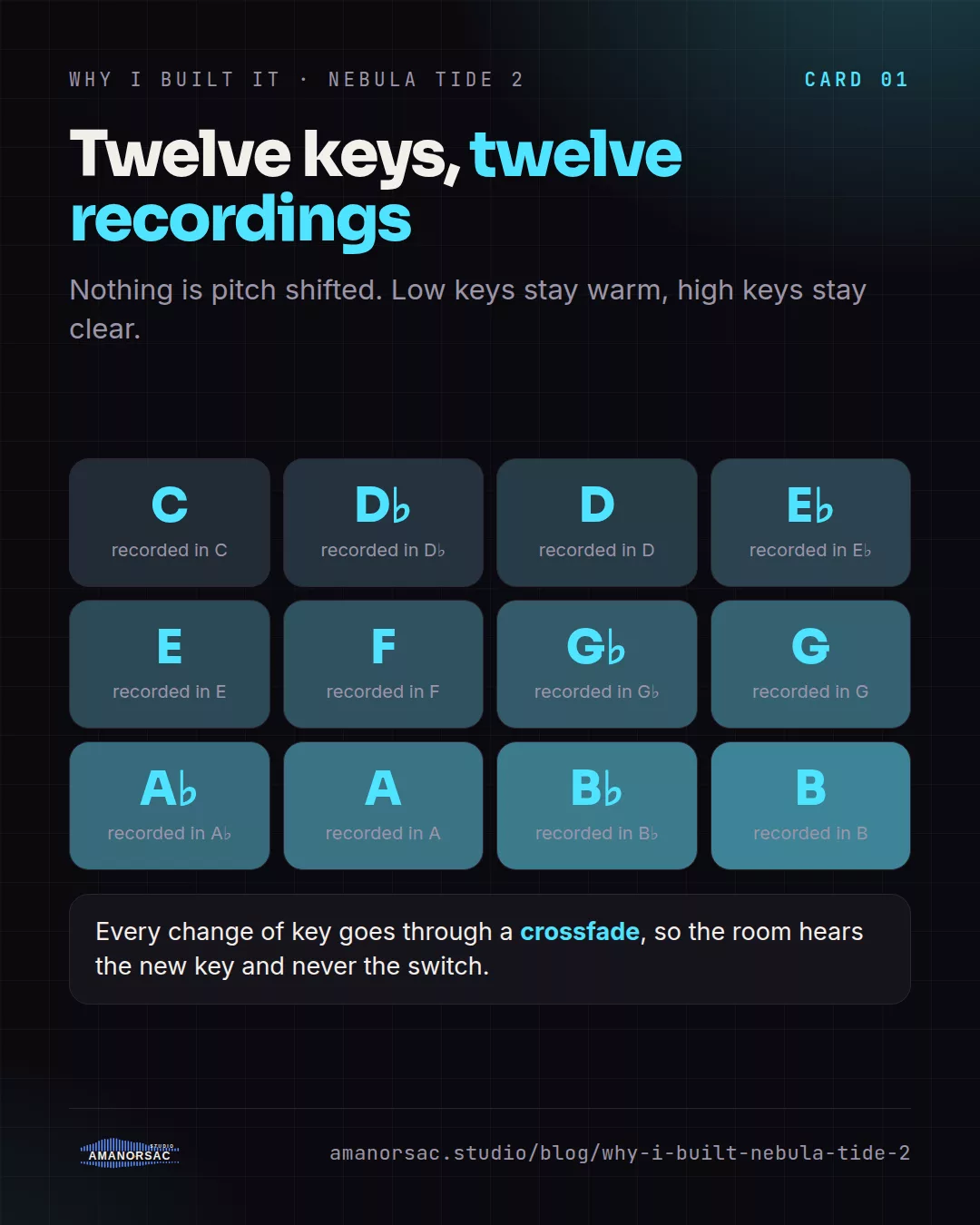
Nebula Tide 2 is an ambient pad instrument for Windows, macOS and Android. Tap a key and the room fills with a pad recorded in that key. Each of the twelve keys is its own real recording, never pitch shifted from another, so the low keys stay warm and the high keys stay clear. Every pad loops without a seam for as long as you leave it, and every change of key or preset goes through a crossfade, so the congregation hears the new key and never the switch.
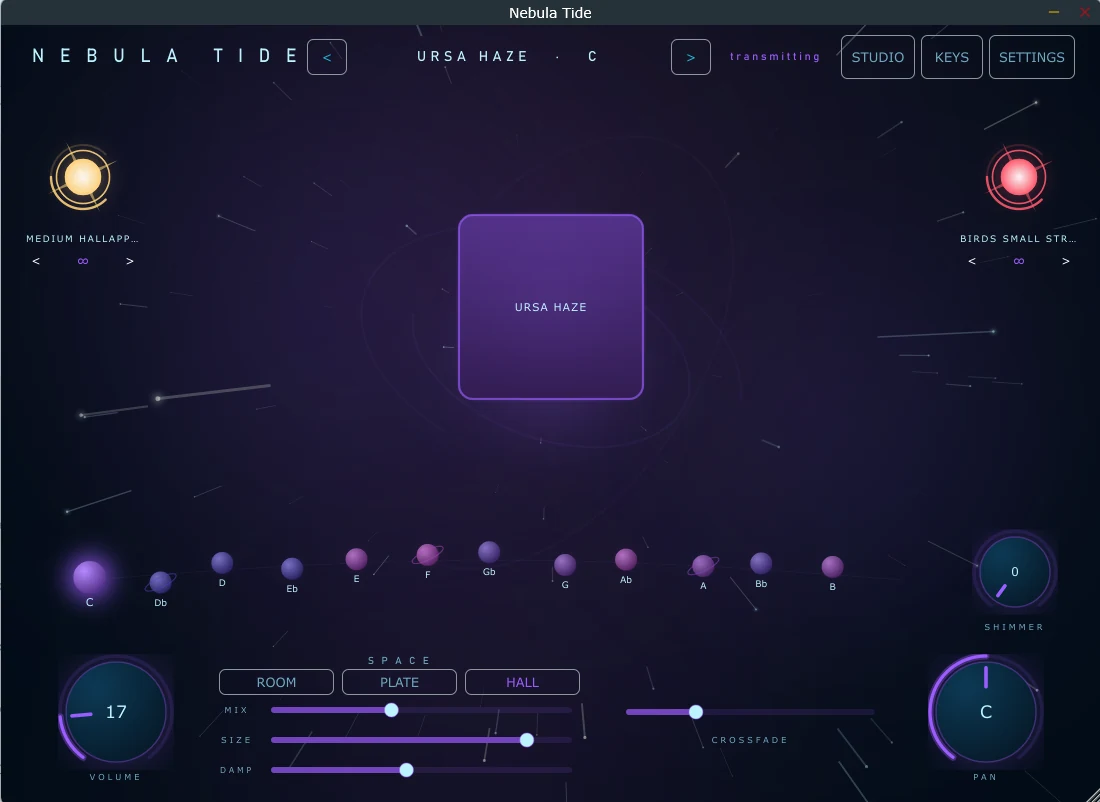
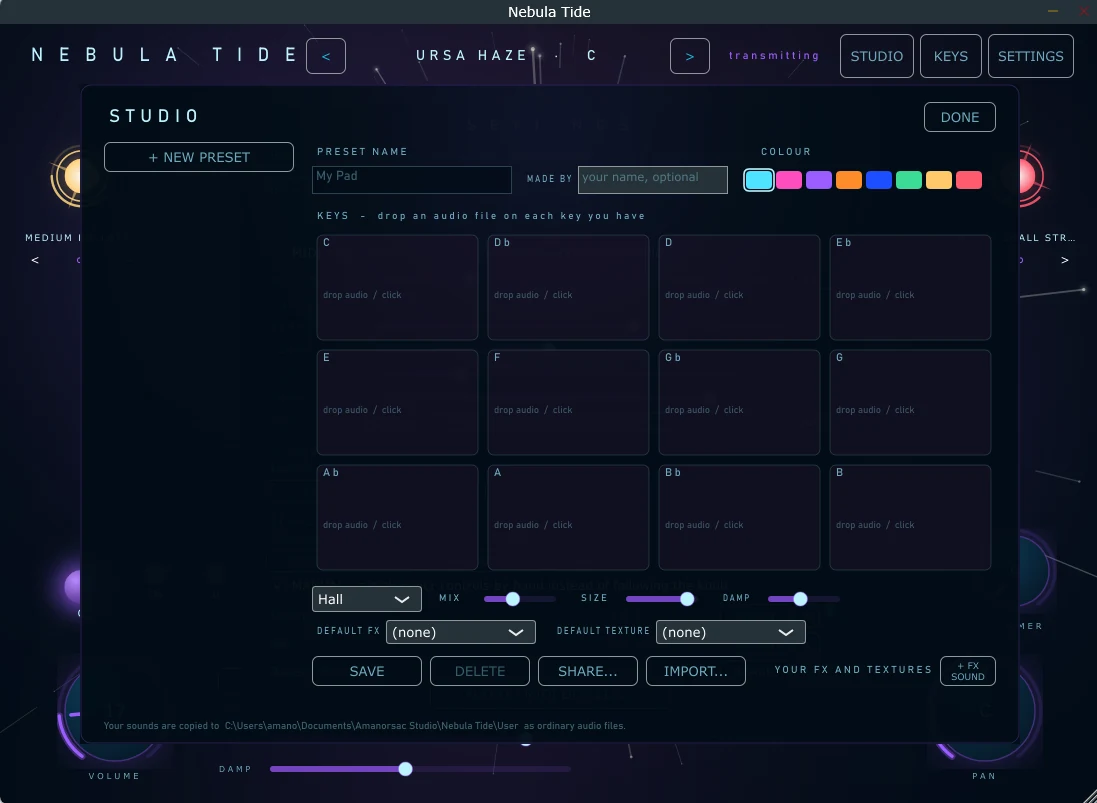
Version 2 added three things. A shimmer the pads run through, not beside: one control at the bottom adds a hint of air and at the top opens into a room with no ceiling, moving five things at once. A Studio page with twelve slots where you drop your own recordings, one per key, name them, colour them and share them as presets. And a drag handle: drag from the app onto a track in your DAW and a MIDI clip lands there, already in key, with the pad on one channel and the effects and textures on another.
Your MIDI keyboard splits into three zones, effects low, the twelve keys in the middle, textures at the top, and any knob can be learned to a controller. It runs as a standalone app and as a VST3 on Windows, VST3 and AU on the Mac, and as an Android app that signs in with the same account.
The problem it solves
A pad in the right key, right now, that does not stop until you say so, and does not sound slightly wrong the further you move from the key it was made in. That is the whole brief, and the reason the twelve recordings are separate recordings rather than one stretched sample.
What else is out there
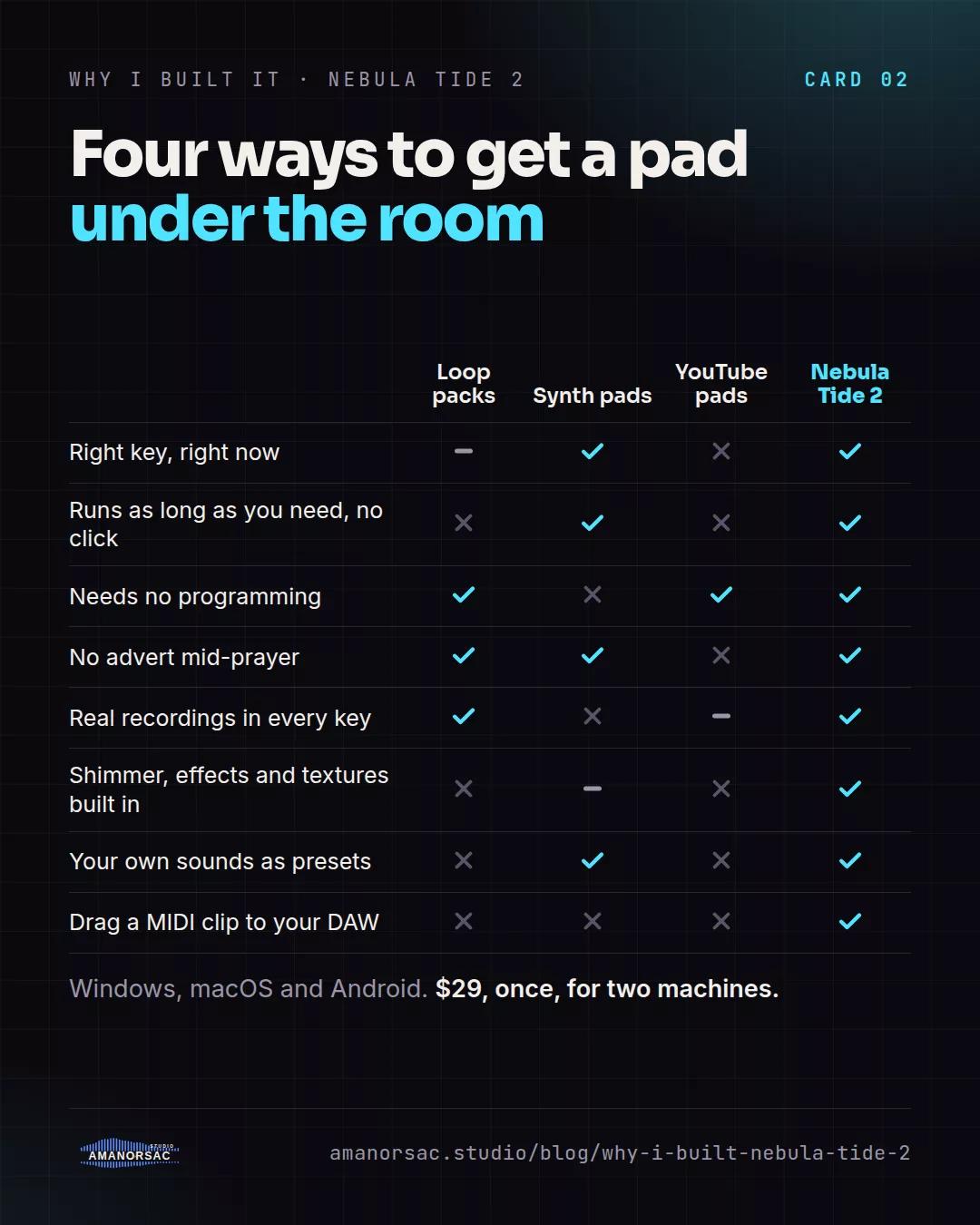
Pad loop collections, such as the Coresound sets sold through MultiTracks, give you long audio files in every key; at the time of writing a collection lists at around $139 to $199, and they are files you play back rather than an instrument you play. Synth pads inside a big instrument sound wonderful and need a patch, a MIDI setup and someone who knows the synth. YouTube pads are free and have an advert where your prayer was. Nebula Tide is an instrument: pick a key, press the square, and it is done.
Who it is for
Worship keys players and music directors. Anyone leading prayer or transitions who needs a bed under the room. Producers who want a real recorded pad on the timeline in one drag. And the Android version is for the player whose rig is a phone and a cable.
Version 1 is still here
Version 1 is sold on its own for $9, with the twelve real recordings, the living interface and the seamless loops. Everyone who had it free before 11 October 2026 keeps it. Version 2 is a separate release with its own key, and installing it leaves version 1 alone.
Price and licence
$29, once. One purchase covers two machines, moved by you, with a year of updates. Desktop versions install through Amanorsac Hub; the Android app downloads its library the first time it opens. The recordings ship in a single encrypted container, installed where you choose.
Written by Stephen Amanor Sackey — producer, mix engineer and music director, Virginia. More about the studio.